
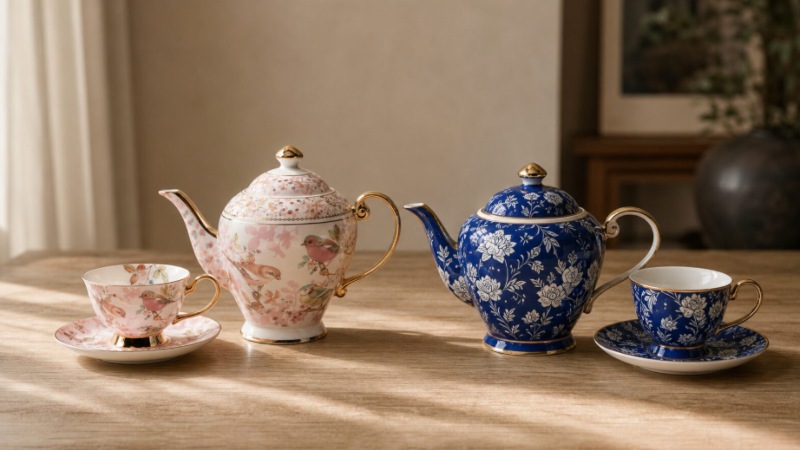
Ceramics often defy our physical intuition. We frequently assume that a heavy, thick cup is the most durable option, while delicate, translucent teaware is fragile. Understanding the basic material differences between bone china and standard porcelain reveals why thinness does not always equate to weakness, and how the physical structure of your cup can influence the way you brew tea.
Visual Deception in Teaware
Hold a translucent cup to the sunlight, and the edge feels as delicate as an eggshell. It is natural to assume that such a thin vessel would shatter under the slightest pressure. We often equate thickness with strength, thinking a heavy mug is far more durable than a delicate teacup.
The reality is more nuanced. Bulk alone doesn’t guarantee durability, and thinness alone doesn’t guarantee fragility.
Ceramic engineers often compare these materials using flexural strength — sometimes called the Modulus of Rupture — which measures how much bending stress a material can withstand before breaking. Results vary with the recipe, firing process, thickness, and manufacturer, so the material name alone does not predict how a particular cup will perform.
In practice, this means a thin, light piece of bone china can hold up to bending stresses that might crack a thicker porcelain vessel of similar quality, even though it looks more fragile.
The Chemistry of Bone Ash
This comes down to a formula developed in England in the late eighteenth century. Potter Josiah Spode II standardized a recipe using calcined cow bone ash, which changed how English ceramics were made.
When fired at high temperatures, the bone ash, clay, and other ingredients form a ceramic body with properties that differ from standard porcelain. Bone ash contributes to bone china’s characteristic warm-white color and translucency, while the finished strength still depends on the full recipe and firing process.
A well-made bone china body can combine low weight, thin walls, and useful strength, which is why manufacturers can produce delicate-looking pieces that remain practical for regular use. Quality varies, however, and thin bone china is not automatically chip-proof or resistant to sudden temperature changes.
Thermal Dynamics in Your Teacup
The physical properties of your cup can shape how your tea brews. Wall thickness, more than the bone china vs. porcelain label itself, is usually the bigger factor in how fast a cup conducts and dissipates heat — both materials can be made thin or thick.
That said, bone china is often made thinner than standard porcelain as a matter of style and tradition, and a thin-walled cup does let heat escape faster than a thick-walled one. Some tea drinkers prefer this for delicate green teas, since faster cooling can help avoid over-steeping at high temperatures.
Thicker-walled cups, whether porcelain or bone china, tend to hold heat longer, which some people prefer for robust black or dark teas that are brewed at sustained higher temperatures. Either way, this comes down to wall thickness and personal brewing preference more than the material label on the box.
Sensory Checks (Not a Substitute for Verification)
A couple of simple observations can give you a rough sense of whether a piece is likely bone china or standard porcelain, though neither is a reliable way to confirm authenticity on its own. For a purchase where it matters, a maker’s mark, manufacturer documentation, or listed bone ash content is a better guide than either of these checks.
First, hold the cup up to a bright light. Bone china is generally more translucent and often shows a warmer, ivory-toned light through the walls. Standard porcelain tends to block more light and can show a cooler, grayish tint, though this varies by manufacturer and glaze.
Second, gently flick the rim of the cup with your fingernail. Bone china often produces a longer, higher-pitched ring, while standard porcelain tends to sound shorter and duller. This is a fun, informal test, but wall thickness and glaze also affect the sound, so treat it as a starting point rather than proof.
Durability and Daily Care
While well-made bone china holds up well against everyday impacts, durability in a busy kitchen involves more than just impact strength.
It helps to separate structural toughness (resistance to cracking or chipping) from surface scratch resistance (how the glaze holds up over time), since these depend on the specific glaze formula, firing process, and wall thickness of a given piece — not just whether it’s labeled bone china or porcelain. A few care habits will help either material stay in good condition:
- Use soft sponges rather than abrasive pads, since aggressive scrubbing can dull most glazed finishes over time regardless of material.
- Hand-wash pieces with gold rims, as dishwasher cycles can quickly wear away delicate metallic detailing.
- Never microwave metallic-trimmed cups to prevent electrical sparking that damages the glaze.
Choosing Your Teaware
Choosing the right cup is about matching the material to your daily routine. The chemistry explains some of the differences, but your habits determine which option fits best.
If you need sturdy, everyday cups that can handle being stacked in a busy sink, standard porcelain is a reliable, low-maintenance choice. Its typically thicker build stands up well to frequent washing and rough handling.
If you prefer a slower, more tactile ritual, a curated bone china teaware collection offers a distinct look and feel. Choosing between the two often comes down to whether you prefer the heft and heat retention of thicker porcelain or the light weight and warm translucency of bone china.