Australian bedrooms are shrinking and often measure under 10m², but our lifestyles certainly are not. When space is at a premium, a well-planned single bed setup can turn a modest 2.5m x 3m room into a highly functional retreat. Meanwhile, we are asking these rooms to do more than ever before. Today, a bedroom is often a sleep sanctuary, a home office, and a storage unit for hobby gear all rolled into one.
The result is frequently a space that feels more like a cluttered warehouse than a place to rest. However, as someone who has spent two decades in the furniture industry, I can tell you that the square metres are rarely the problem. The issue is almost always the layout. This guide explores the strategic moves that work in real Australian homes, requiring zero renovations.
Why the single bed is a space-saving powerhouse
Many people default to a double bed because it feels like the “adult” choice, yet in a small room, this is often a tactical error. A standard single bed is 92cm wide, while a double is 138cm wide. That 46cm difference might not sound like much on paper, but it equates to nearly a full square metre of reclaimed floor space.
In a compact floor plan, that extra space allows for:
- A dedicated desk for a proper work-from-home setup.
- A comfortable armchair for a reading nook.
- The ability to open wardrobe doors fully without hitting the mattress.
- Breathable thoroughfares where you do not have to walk sideways to reach the window.
Five smart placement strategies for small rooms
1. The longest wall approach
Centring your bed along the longest wall is the most traditional move for a reason. It creates the largest possible rectangle of remaining floor space. This is ideal for rooms that are roughly 3.5 metres long. For the best result, aim to leave at least 60cm of clearance on either side to make bed-making less of a chore.
2. The corner tuck
If you are dealing with an L-shaped or awkwardly proportioned room, tucking the bed into a corner at a 90-degree angle is a lifesaver. This utilises “dead” corners and frees up the straight walls for tall storage units or a desk.
3. Perpendicular to the window
Positioning your bed at a right angle to the window maximises natural light distribution. It also helps with temperature regulation, as you are not sleeping directly against a glass pane that radiates heat in summer or cold in winter.
4. The floating zone
In rooms larger than 9 square metres, pulling the bed 30cm away from the wall can create distinct zones. You can use that gap for slim shelving or cable management for your tech.
5. Layout traps to avoid
There are a few “non-negotiables” when placing furniture in small spaces:
- Door swings: You need at least 80cm of clear space for a standard bedroom door to open.
- Wardrobe access: Hinged wardrobes require 60cm of clearance to be functional.
- Low ceilings: If you have a sloped ceiling, ensure you have at least 1.5 metres of headroom at the pillow end.
Vertical storage solutions that actually work
When you cannot build out, you must build up. This is the most under-utilised strategy in Australian interior design.
High-level shelving
Floating shelves installed 40cm above the headboard provide storage for books and essentials without using a single centimetre of floor space. Use white or light timber finishes to keep the room feeling “airy.”
Under-bed real estate
The space beneath your mattress is prime storage territory. You have three main professional options:
- Gas lift beds: These allow the entire mattress to lift, revealing a cavernous storage area.
- Drawer bases: Built-in drawers are excellent for items you need to access daily, like shoes or gym gear.
- High-clearance frames: A standard frame with 25cm of clearance allows you to use slim, rolling storage boxes.
Essential multi-functional furniture
Every piece of furniture in a small room should do at least two jobs. As an expert, these are the three items I always recommend for single bed setups:
| Item | Primary Job | Secondary Job |
| Storage Ottoman | Seating at the foot of the bed | Hidden storage for bulky blankets |
| Fold-down Desk | Full work surface | Folds to 10cm depth when not in use |
| Nesting Tables | Bedside surface | Can be separated when guests visit |
Visual tricks to expand your perception of space
Interior design is as much about psychology as it is about furniture. You can make a room feel 20% larger just by changing the visual flow.
- Light colours: White and pale timbers reflect up to 90% of light. In contrast, dark furniture absorbs light and makes walls feel like they are closing in.
- Mirrors: Placing a large mirror opposite a window is the oldest trick in the book, and it still works. It doubles the perceived depth of the room.
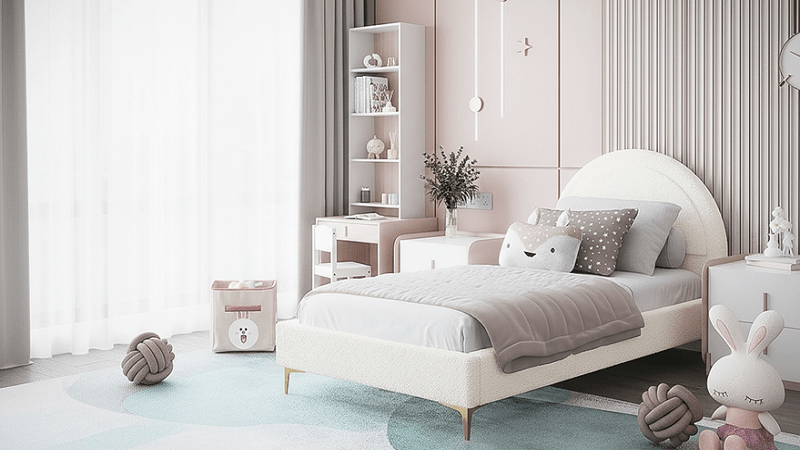
- Leggy furniture: Choose a bed frame and desk with slim legs rather than solid bases. Seeing more of the floor creates an illusion of boundless space.
The Bottom Line
Small bedrooms do not have to mean a small lifestyle. They simply require a more disciplined approach to furniture selection. By choosing a single bed and building your storage vertically, you reclaim the space necessary to actually enjoy your room.
The square metre you save by choosing a single over a double is not just a statistic; it is the difference between a cramped sleeping cell and a functional, multi-zone sanctuary.