
Keeping your mouth healthy during teeth straightening is essential for long-term dental success. Orthodontic treatment often makes daily oral care more challenging, but establishing a careful routine can prevent complications. This article provides clear guidance to help you protect your teeth and gums at each stage of treatment, with a focus on orthodontic services available in Queensway, London, including Invisalign, Angel aligners, and braces.
Many people discover that orthodontic treatments, whether involving fixed braces or clear aligners like Invisalign or Angel aligners, require adjustments to their regular cleaning habits, and a dental team such as Kai Dental in Queensway, London may also recommend tailored hygiene techniques for different appliances. As brackets, wires, and plastic trays increase the risk of plaque build-up, keeping up with oral hygiene is crucial to reduce the risk of gum issues and tooth decay. Choosing consistent oral care practices will help support lasting results and keep discomfort to a minimum. Understanding what changes when your teeth are being straightened is the first step towards maintaining a healthy smile.
Understanding the challenges of orthodontic treatments
Fixed braces create new challenges for cleaning your teeth every day. Brackets and wires introduce more surfaces where food particles and plaque can accumulate, increasing the risk of cavities and gum irritation.
Clear aligners, such as Invisalign and Angel aligners, have their own considerations, as trays must be worn for extended periods and require removal during meals. If not cleaned regularly, aligners can develop odours or trap bacteria against your teeth, highlighting the importance of disciplined oral care routines.
Early on in treatment, you may experience tenderness or sores where your lips and cheeks touch new appliances. These initial irritations can interfere with your toothbrush technique, but they typically settle once your mouth gets used to the change.
You might also notice an increase in dry mouth or bad breath in the first weeks of wear, making it especially important to keep up with thorough cleaning. With clear aligners, leaving trays in while sipping sugary drinks may raise the risk of tooth staining and decay.
Adapting daily hygiene for braces and aligners
Proper brushing becomes more important when you have orthodontic appliances. It is generally recommended to brush after every meal and before bed, taking extra care around brackets and wires. Short, gentle strokes at the gumline help remove trapped food and lower the risk of irritation. Your dental professional may adjust these recommendations based on your specific needs.
Interdental cleaning is essential, with options like floss threaders, interdental brushes, and water flossers making it easier to reach between teeth and around appliances. Many individuals find interdental brushes particularly effective for cleaning the narrow spaces that develop with braces, while water flossers can help remove debris comfortably.
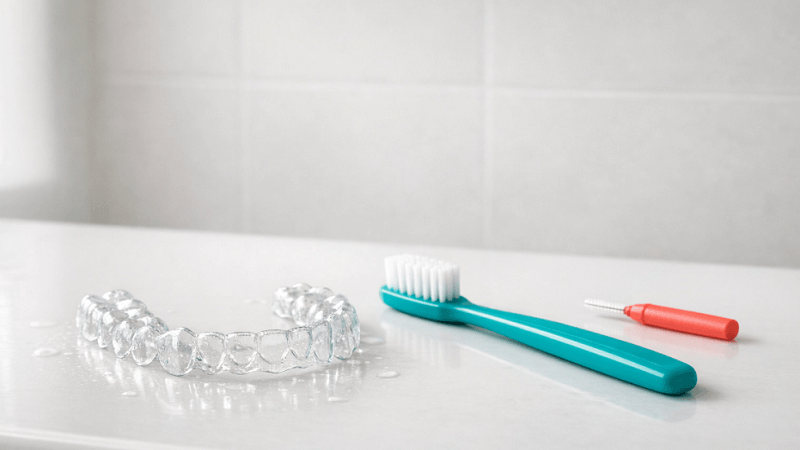
For clear aligners, including Invisalign and Angel aligners, trays should be cleaned with a soft brush and clear, mild soap daily to reduce build-up and odours. It is important not to use hot water, as this can warp the plastic and compromise their fit.
Brushing your teeth after snacks and before putting aligners back in helps decrease the risk of trapping sugars or acids. Avoid keeping aligners in while drinking anything other than water, as doing so can increase the likelihood of tooth staining and bad breath.
Smart food and drink habits for safer treatment
Certain foods present more risk to braces, as sticky sweets and hard foods like nuts can cause bracket failures or bend wires. Opting for soft, braces-friendly options like pasta, cooked vegetables, and yoghurts reduces the risk of breakages and discomfort.
Frequent snacking, especially on sugary or acidic foods and drinks, increases the risk of decay. Limiting snacks and rinsing your mouth with water after eating helps neutralise acids and better protect tooth enamel during this period.
Preparing school or work lunches with sliced fruit, cheese, pitta bread, or pre-cut vegetables can be a practical way to avoid problem foods. For those using clear aligners such as Invisalign or Angel aligners, carrying a bottle of water and a compact toothbrush can help you clean your teeth when away from home.
Staying hydrated throughout the day aids saliva production, which naturally protects teeth, and it can help with dry mouth. Checking lunchbox options with the advice of your dental provider can help ensure snacks are both safe and nutritious.
Monitoring gum health and staying on schedule with care
Gum inflammation and early enamel damage can develop quickly during orthodontic treatment if routines slip. Look out for signs like redness, bleeding, or chalky white marks near brackets, as these may signal gingivitis or decalcification.
Using fluoride toothpaste and mouthwash every day helps strengthen enamel and support the reduction of decay risk. Choosing age-appropriate products helps ensure suitable fluoride levels for children and adults, and rinsing after brushing can reach spots that toothbrushes miss.
Unexpected problems, such as broken brackets or lost aligners, can disrupt your cleaning routine. It is best to keep up hygiene as closely as possible until repairs are made, using orthodontic wax or salt water rinses to relieve soreness but without skipping brushing.
Regular dental check-ups and hygienist appointments remain important throughout orthodontic care, even when visits for adjustments are scheduled. Routine dental services such as scale and polish, professional cleaning, and fluoride guidance support your oral health as you proceed with Invisalign, Angel aligners, or braces in Queensway, London. Seeking advice from your dental team on cleaning methods can help ensure your oral health stays on track as treatment progresses.
Developing a routine that fits into your daily life helps protect your teeth and gums during orthodontic treatment. With extra care and the right cleaning tools, you can maintain comfort and help ensure your treatment leads to a healthy, confident smile.