Every bushfire season, Sydney gets the same reminder: nature is very much in charge. The sky turns orange, the air smells like someone’s barbecue party got wildly out of hand, and everyone starts checking the RFS app every five minutes like it’s social media.
You shut the windows and maybe light a candle. While you’re busy feeling productive, smoke slips through every gap it can find and makes itself comfortable in your carpet.
So, here’s how to clean your rug before that smoky reminder sticks around longer than it should.
Why Your Carpet Is a Magnet for Smoke
Smoke is a mix of ultra-fine particles: soot, ash, carbon, and a cocktail of chemical compounds small enough to slip through the tiniest gaps in your home.
Once inside, those particles don’t just float around and disappear. They settle on all surfaces, and carpets, with their dense fibres, are basically a five-star hotel for airborne debris.
Particles sink into the pile and sit there, slowly releasing pollutants back into your indoor air over days, weeks, or even months after the fire event.
For anyone with asthma or allergies, this can cause severe symptoms. But even if your lungs are in great shape, breathing in smoke residue for too long won’t do you any favours.
Signs Your Carpet Has Absorbed Smoke
So, how do you actually tell if smoke has settled into your carpet?
Start with the most obvious clue: the smell. Does your home still carry that lingering campfire scent days after the smoke event, even after you’ve aired the place out? If the windows have been open and the smell refuses to leave, your carpet is very likely holding onto it.
Take a look at the carpet itself as well. Lighter rugs often develop a greyish or dull appearance after smoke exposure. That happens because fine soot settles into the fibres and leaves a flat, slightly dirty look that a quick pass with your vacuum won’t fix.
And if you or your family are sneezing more than usual or waking up with a scratchy throat, fine particles may be getting kicked back into the air every time someone walks across it.
The Right Way to Remove Ash from Carpets
After a bushfire, ash has a way of turning up everywhere. It comes in on shoes, sticks to pet paws, and somehow ends up on the hems of your jeans before being tracked straight onto your carpet.
To fix this, use a vacuum with a HEPA filter to lift it from the surface. Take your time here. Slow, overlapping passes work far better than a quick once-over.
Still seeing some residue after vacuuming? Mix a small amount of dish soap with cold water and gently blot the area with a clean cloth. And this part matters: blot, don’t scrub. Scrubbing will just push the ash deeper into the fibres.
Simple Tricks for Clearing Smoke Smells
The smoke outside has cleared, your windows have been open for days, and yet your home still smells like someone toasted marshmallows indoors.
That happens because smoke doesn’t just sit on the surface of your carpet. Tiny particles attach themselves to the fibres, which means the smell sticks around long after the smoke itself is gone.
You might feel tempted to spray air freshener and call it a day. Unfortunately, that’ll just make your living room smell like a campfire with a hint of citrus.
Instead, sprinkle some bicarb generously across the affected area, leave it overnight, then vacuum it up thoroughly. It’ll absorb odours instead of masking them, and it won’t damage your carpet or leave any residue behind.
For better results, follow up with a light application of diluted white vinegar and leave it to dry naturally; it’ll neutralise the remaining smells that the bicarb missed.
When to Schedule Professional Carpet Cleaning
Most people wait until their carpet smells like a campsite or starts looking slightly questionable before doing anything about it. By that stage, the smoke particles have already spent weeks working their way deep into the fibres.
If a serious smoke event has rolled through, book a treatment within a week or two, even if everything still looks perfectly normal on the surface.
Bushfire conditions across Australia can stretch on for months, meaning your carpet can take repeated hits throughout the season without you ever getting on top of it.
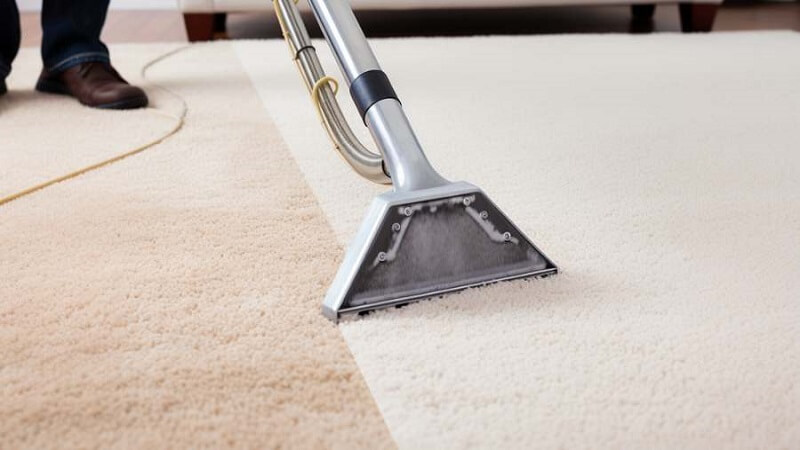
If you’re looking for professional carpet cleaning in Sydney, pick a provider that uses hot water extraction.
These systems heat water to around 150°C, pulling built-up particles and odours out of the fibres in a way no rented machine can fully match.
If you’re dealing with ongoing smoke exposure, getting a professional treatment every 3–4 months during peak season is genuinely worth the investment.
Smart Ways to Protect Your Carpets
You can’t stop smoke from drifting through the air. But you can protect your carpets from bearing the brunt. Here are a few practical ways to keep the build-up under control:
- Seal entry points. Take a look at the gaps around doors and windows. Weatherstrips and draft excluders are inexpensive and surprisingly effective at reducing how much smoke makes it inside.
- Run an air purifier. A good air purifier with a HEPA filter can catch a large portion of fine smoke particles before they have a chance to settle into fabrics and carpets. If smoke levels spike, keep it running for longer than usual.
- Use mats and don’t wear shoes inside. Place sturdy mats at every entry point and treat them as your first line of defence. And during smoke events, it helps to not wear shoes indoors to reduce the amount of soot that gets tracked onto your rugs.
- Vacuum more often. During active fire periods, aim to vacuum two or three times a week. And don’t rush it; slow, overlapping passes lift far more particles than a quick lap across the room.
Conclusion
Now that you know your carpet has been moonlighting as a smoke storage unit, it’s time to do something about it.
So, grab your vacuum, tackle the smell, and book that professional treatment you’ve been putting off since last summer. Trust us—once you get on top of it, your home will feel fresher, and those suspicious little coughing fits will quickly disappear.