
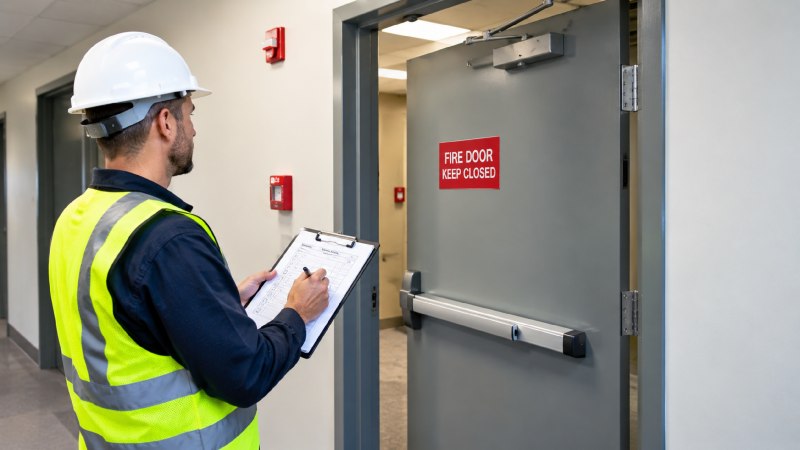
Ensuring the safety of commercial facilities requires meticulous attention to various structural elements, among which fire doors play a critical role. Regular inspections of fire doors are paramount in preventing safety hazards and maintaining compliance with fire safety regulations. This article outlines the best practices for commercial fire door inspections, focusing on strategies that uphold building safety and occupant protection.
Effective fire door inspections involve evaluating multiple components, including hinges, seals, and the overall integrity of fire-rated door frames. Using fire-rated door frames that comply with current safety standards ensures that fire doors perform optimally during emergencies, preventing the spread of fire and smoke.
Understanding the Role of Fire Doors in Commercial Facilities
Fire doors are specifically designed to resist fire and smoke, providing vital protection that allows for safe evacuation and limits property damage. They must be installed and maintained according to regulatory requirements to function effectively.
Key to their effectiveness is the correct installation of door frames. These frames must complement the fire-resistant properties of the door itself, ensuring that the assembly acts as a comprehensive barrier against fire.
Scheduling Regular Inspections
Establishing a regular inspection schedule is fundamental for identifying and addressing potential safety hazards promptly. Inspections should be conducted at least bi-annually, or more frequently in high-risk areas, to ensure continued compliance with fire safety standards.
Inspections must be thorough, examining the door’s operation, the condition of seals, latches, and hinges, and ensuring there are no signs of damage or wear that could compromise performance.
Employing Qualified Professionals
Qualified fire safety inspectors possess the technical knowledge and experience necessary to evaluate fire doors accurately. They can identify subtle issues that may not be evident to untrained personnel, such as compromised seals or misaligned frames.
Engaging professionals ensures that inspections adhere to Australian standards, and any recommended repairs or replacements are appropriate and effective.
Inspection Checklist for Commercial Fire Doors
To streamline the fire door inspection process, a comprehensive checklist should be used. Components to examine include:
- Integrity and condition of the fire door surface and edges
- Functionality of self-closing devices
- Condition and placement of seals and intumescent strips
- Alignment and security of door frames
- Proper operation of locks and latches
- Absence of gaps between the door and frame
- Clear signage indicating fire door functionality
Maintenance and Repair Best Practices
Regular maintenance following inspections is critical to address any identified issues quickly. Replacing damaged seals, adjusting door alignment, or installing high quality doors when necessary prevents the deterioration of fire safety systems.
Maintenance routines should be documented, recording the dates of inspections, issues found, corrective actions taken, and individuals responsible. This documentation supports regulatory compliance and facility management efforts.
Compliance with Australian Standards
Compliance with the Australian Standard AS 1905.1 for fire-resistant doorsets is mandatory in commercial settings. Inspections should verify that fire doors meet these standards, covering aspects such as fire resistance ratings, materials used, and appropriate installation.
Failure to comply can result in significant safety risks and legal liability. Therefore, adherence to these standards during inspections is an indispensable part of commercial facility maintenance.
Training for Facility Staff
In addition to professional inspections, training staff on the purpose and proper use of fire doors contributes to overall safety. Staff should understand why fire doors must remain closed and not be obstructed, as improper use can undermine fire safety measures.
Utilising Technology in Fire Door Inspections
Advancements in technology can enhance the efficiency and accuracy of fire door inspections. Tools such as digital checklists, photographic documentation, and sensor-based monitoring systems can provide real-time data and facilitate prompt responses to safety threats.
Conclusion
Preventing safety hazards through proper commercial fire door inspections is a vital component of facility maintenance. By adhering to best practices including regular professional inspections, diligent maintenance, compliance with standards, and staff training, commercial properties can significantly reduce fire risks and ensure occupant safety.
Investing in quality fire safety equipment, including robust fire-rated door frames, durable door frames, and high quality doors, further strengthens the facility’s preparedness for emergency situations.