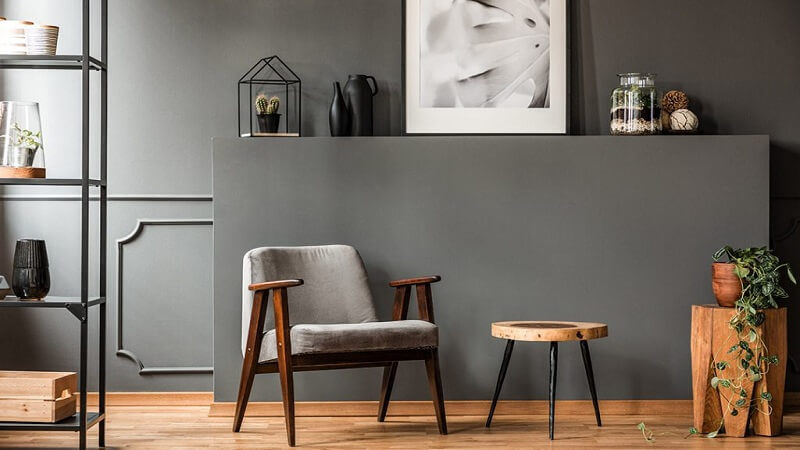
Walls influence a room far more than most people realize. They affect how light moves through a space, how warm or modern an interior feels, and even how furniture and artwork are perceived.
Today, homeowners can choose from far more than standard paint. Wallpaper, natural wallcoverings, lime wash, decorative plaster, concrete finishes, wood panels, and other specialty materials make it possible to treat the wall itself as part of the design.
The challenge is deciding which finish actually belongs in the room.
Start With the Feeling, Not the Material
It is easy to fall in love with a photograph and decide, “I want that wall.” But the same material can produce a completely different effect in another home.
Before choosing a finish, think about how you want the room to feel.
A bedroom may benefit from the warmth and softness of a textile-inspired wallcovering. A contemporary living room might work better with a seamless concrete finish. Lime wash can give a fireplace subtle movement without introducing a repeating pattern, while a bold wallpaper can turn a powder room into one of the most memorable spaces in the house.
The material should support the atmosphere rather than dictate it.
Consider the Natural Light
Light can dramatically change both color and texture.
A flat wallpaper sample viewed under showroom lighting may look completely different next to a large west-facing window. Textured and polished surfaces can change even more dramatically throughout the day because shadows and reflections reveal different parts of the finish.
This is particularly noticeable with Venetian plaster. Direct natural light can reveal depth and movement that are difficult to appreciate from a small sample.
Whenever possible, evaluate samples in the actual room. Look at them during the day and again under the lighting you normally use at night.
Wallpaper Still Has Unique Advantages
Wallpaper remains one of the best ways to introduce pattern, illustration, textile character, and visual softness into an interior.
Modern wallcoverings range from relatively simple non-woven papers to grasscloth, metallic surfaces, murals, natural fibers, and highly sophisticated handmade materials.
Wallpaper can be particularly effective in bedrooms because it can create a warmer and softer atmosphere than a hard mineral finish. It also allows designers to introduce detailed patterns that would be extremely difficult to create manually.
The quality of installation, however, depends heavily on wall preparation. Thin wallcoverings and many peel-and-stick products can reveal imperfections underneath, so a smooth and properly primed substrate becomes extremely important.
Decorative Plaster Creates Something Different
Decorative plaster is not simply an alternative version of wallpaper.
Its greatest advantage is continuity.
A hand-applied plaster finish can extend across a large wall without panel seams or a manufactured pattern repeat. The movement of the trowel, subtle variations in color, and the interaction between different layers create a surface that cannot be duplicated exactly.
That individuality is one reason decorative plaster works particularly well on fireplaces, large accent walls, entry areas, and contemporary architectural features.
Lime wash has become especially popular for homeowners looking for subtle movement and a natural appearance. Concrete finishes can create a stronger architectural statement, while polished Venetian techniques can produce significantly more depth and reflection.
Preparation Is Still the Foundation
There is a common misconception that textured finishes can simply hide a bad wall.
Some decorative systems are more tolerant of minor surface irregularities than thin wallpaper, but every successful finish still begins with a stable and properly prepared substrate.
The preparation depends on the material, existing wall condition, moisture exposure, and manufacturer’s system.
Bathrooms and other high-moisture areas may require specialized primers, waterproofing, or sealers. New drywall has different requirements from previously painted walls, masonry, brick, or other substrates.
This is where installation experience becomes particularly important. Manufacturer instructions establish the technical requirements, while the installer must determine how those requirements apply to the actual conditions of the building.
Think About the Entire Interior
One of the most effective approaches is not choosing between wallpaper and plaster at all.
Use both.
A living room might feature a decorative plaster fireplace while an adjoining dining room uses a sophisticated wallcovering. A bedroom can combine a soft wallpaper with a subtle lime wash architectural element. Wood panels, plaster, wallpaper, and paint can all coexist when there is a clear hierarchy.
Companies specializing in multiple wall finishes, such as Enjoy The Wall, can approach the decision from this broader perspective rather than trying to make one material work everywhere.
The best interiors often succeed because different surfaces perform different roles.
Consider Maintenance and Future Repairs
Durability is another factor that should be considered before installation.
High-quality wallpaper can last for decades in areas where it is protected from physical damage and excessive direct sunlight. However, pets, children, furniture, and everyday activity can damage exposed areas.
Replacing wallpaper several years later can also present a challenge. Even when the original material remains available, the existing wallcovering may have changed slightly from light exposure, while the replacement material is new.
Many decorative plaster systems can be repaired and blended by an experienced applicator. This can become especially valuable when a wall must later be opened for electrical work, plumbing, or another modification.
Neither material is maintenance-free, but understanding how it ages can influence where it should be used.
Budget for the Finish, Not Just the Material
Material price alone rarely represents the true cost of a finished wall.
Wallpaper installation may include wall repair, skim coating, sanding, priming, material, and professional installation. Decorative plaster can involve several different products and multiple application stages before the final surface is complete.
Decorative plaster is generally the more expensive option because both the materials and skilled labor can be substantial. Complex finishes may involve numerous layers, color work, polishing, waxing, or sealing.
At the highest end of the wallpaper market, however, premium wallcovering plus preparation and installation can cost more than some decorative plaster techniques.
Comparing complete installed systems gives homeowners a much more realistic picture than comparing material prices alone.
A Wall Finish Should Belong to the Architecture
Trends are useful for discovering materials, but they should not determine every design decision.
A finish that works beautifully in a modern mountain home may feel completely out of place in a traditional interior. Likewise, an elaborate wallpaper that looks impressive in a photograph may overwhelm a room with limited natural light or too many competing architectural elements.
The best approach is surprisingly simple: consider the architecture, lighting, function of the room, existing surfaces, maintenance expectations, and budget together.
Then choose the finish.
When those decisions are made in the right order, walls stop being merely the background of an interior. They become part of the architecture itself.