Introduction and Market Relevance
Across Canadian industrial maintenance shops, assembly areas, and repair facilities, having a dedicated workspace with organized tool storage is essential for productivity. Scattered tools and inadequate work surfaces slow down repairs and increase error rates. A platform workbench provides a large, durable work surface combined with lockable storage for tools and parts. Canadian automotive shops, manufacturing facilities, and equipment repair centers use these benches to centralize work activities and reduce wasted motion.
Common Applications and Design Features
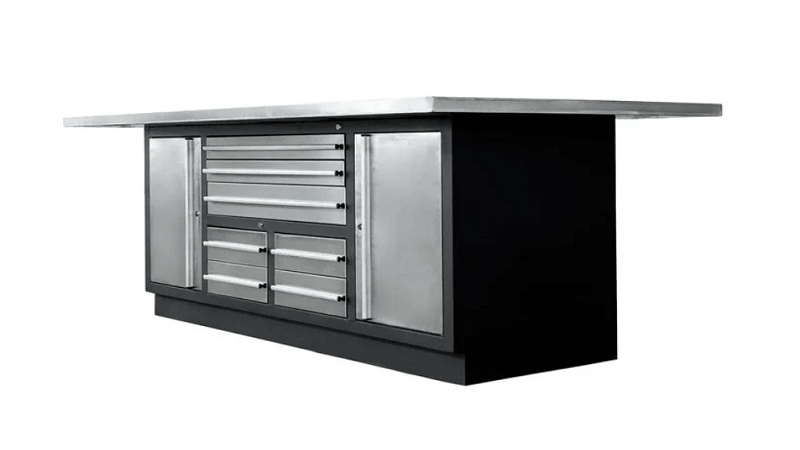
The workbench features an extra-large stainless steel work surface measuring 85 inches by 45 inches. This size accommodates large components such as engine blocks, transmission cases, and industrial machinery parts. The fully welded steel frame provides stability under heavy loads. Seven lockable drawers and two storage cabinets with adjustable shelving organize tools, hardware, and supplies. The keyed-alike locking system secures all drawers and cabinets with a single key for convenience.
Workspace Efficiency and Organization
An organized work surface reduces the time spent searching for tools and materials. When each tool has a designated drawer and each part has a dedicated storage location, technicians work faster with fewer interruptions. The large work surface allows multiple tasks to be staged simultaneously, reducing setup time between operations.
Durability and Surface Protection
Stainless steel work surfaces offer several advantages over other materials. The non-porous surface resists absorption of oils, solvents, and chemicals. Spills wipe clean without staining. The material withstands impacts from dropped tools and components without cracking or denting. The 14-gauge thickness provides rigidity without excessive weight.
Storage Security and Inventory Control
Lockable storage protects valuable tools and precision instruments from theft or unauthorized use. In multi-shift operations, locked drawers ensure that tools remain in designated locations between shifts. The keyed-alike system eliminates managing multiple keys, reducing the chance of lost keys locking technicians out of needed tools.
For quality control and calibration purposes, locked storage prevents unauthorized personnel from accessing precision instruments. This control helps maintain calibration integrity and ensures that only trained technicians use sensitive equipment. The locking system also secures proprietary parts or high-value components awaiting installation.
Safety Practices and Maintenance Guidelines
Safe workbench operation requires several key practices:
- Distribute heavy items evenly across the work surface
- Avoid standing or climbing on the workbench surface
- Close drawers and cabinets before moving the bench
- Lock casters in position before beginning work
- Keep work surface clear of clutter for safe operations
Maintenance includes cleaning the stainless steel surface with mild detergent, checking drawer slides for debris, lubricating lock mechanisms annually, inspecting casters for wear, and tightening any loose fasteners. Spills should be wiped promptly to prevent slipping hazards and surface staining.
Advantages and Limitations
Advantages of a platform workbench include:
- 85 by 45 inch stainless steel work surface
- 7 lockable drawers with ball-bearing slides
- 2 locking storage cabinets with adjustable shelving
- 100-pound drawer load capacity
- Fully welded steel frame construction
- Keyed-alike locking system for convenience
- Powder-coated finish for corrosion resistance
Limitations to consider:
- Large footprint requires adequate shop space
- Heavy weight makes relocation difficult
- Stainless steel surface can show scratches
- Higher cost than basic wood or laminate benches
- Professional assembly recommended
Real-World Application Example
A Canadian heavy equipment repair shop in Ontario serviced large mining trucks and excavators. Technicians worked on portable tool carts with inadequate surface area. Large components required moving between multiple benches during assembly. The shop installed an 85-inch stainless steel platform workbench. The large surface accommodated complete engine assemblies. Lockable drawers organized specialized tools for each equipment type. The stainless steel surface resisted oil and solvent damage. Repair times decreased as technicians worked without relocating components between stations.
Conclusion and Future Outlook
Industrial maintenance and manufacturing operations need durable, organized workstations that support efficient workflows. TMG Industrial Platform workbenches with stainless steel surfaces provide a clean, chemical-resistant work area combined with secure tool storage. As shops continue focusing on lean manufacturing principles, demand for organized, multi-functional workstations will likely increase. Future designs may include integrated power outlets, lighting, and modular drawer configurations.
Shop managers should evaluate platform workbenches for any maintenance or assembly operation requiring heavy component handling and organized tool storage. The combination of large stainless steel surface and lockable drawer storage makes this workbench suitable for diverse Canadian industrial shop applications.