How Much Does a Professional Garden Design Cost?
Planning a new garden can be surprisingly difficult to budget for. Most homeowners have a reasonable idea of what they might spend on paving, fencing, planting or a new lawn, but the cost of the garden design itself is often less clear.
There is no single price for a professional garden design. A simple planting consultation might cost a few hundred pounds, while a large garden requiring detailed construction drawings, level changes and planting plans can run into several thousand.
The important thing is to understand what you are actually getting for the design fee.
What Does a Garden Designer Actually Do?
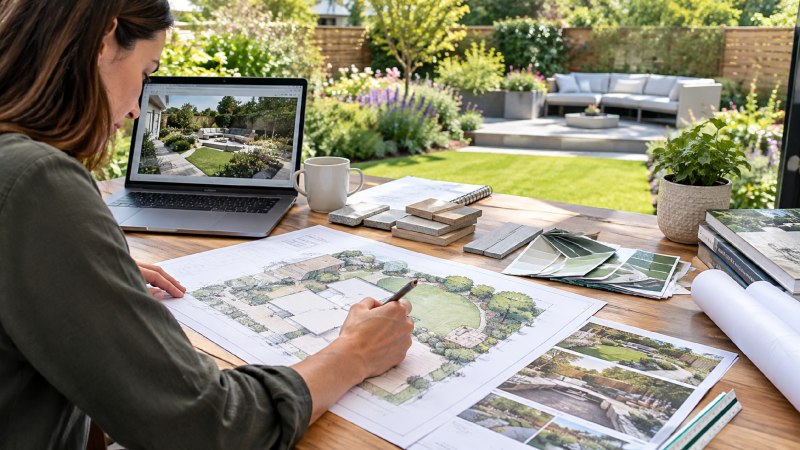
A professional garden designer does considerably more than produce an attractive drawing.
The design process normally begins with a consultation to understand how the garden needs to work. This could include questions about how the family uses the space, whether children or pets need to be accommodated, where people sit outside, how much maintenance is acceptable and what views should be created from inside the house.
The designer then considers the physical characteristics of the garden.
These can include:
- The size and shape of the garden
- Existing buildings and boundaries
- Changes in level
- Drainage
- Soil conditions
- Existing trees and planting
- Sunlight and shade
- Access for construction
- Privacy and neighbouring properties
- Planning restrictions
From there, the design develops into a practical plan that can ultimately be used to build the garden.
That distinction is important. There is a significant difference between a picture of what a garden could look like and a set of drawings that a landscaping contractor can actually build from.
How Much Should You Budget?
Garden design fees vary according to the size and complexity of the project, but homeowners will generally encounter several different pricing structures.
A designer may charge a fixed project fee, an hourly or daily rate, or a percentage of the anticipated construction cost.
For smaller projects, a consultation or planting design may cost a few hundred pounds. A more comprehensive design for an average-sized residential garden can cost several thousand pounds once surveys, detailed drawings and specifications are included.
Larger or more complicated projects can cost considerably more.
Rather than focusing purely on the headline figure, it is worth asking what is included in the price.
For example, one designer’s £1,500 quote might cover a concept plan and one revision, while another designer’s £3,500 fee could include a measured survey, several design stages, planting plans, construction drawings and detailed specifications.
The second option may actually represent better value if you are planning a substantial landscaping project.
What Is Included in a Full Garden Design?
A comprehensive garden design can involve several separate stages.
1. Initial Consultation
The first meeting is an opportunity to discuss your requirements and establish what you want the garden to achieve.
This is where you can explain your priorities, whether that means creating an entertaining space, improving privacy, introducing more planting or simply making the garden easier to use.
2. Site Survey
The garden needs to be accurately measured before detailed drawings can be produced.
A survey may record boundaries, buildings, existing trees, structures and changes in level.
For a relatively flat garden, the designer may be able to undertake the measurements themselves. More complicated sites may require a professional topographical survey.
3. Concept Design
The concept plan establishes the overall layout.
This is where decisions are made about the position of patios, terraces, paths, lawns, planting areas, walls, steps and other features.
It is also the stage where it is relatively inexpensive to make changes.
Moving a proposed patio on a drawing is easy. Moving one after it has been built is considerably more expensive.
4. Planting Plan
A professional planting plan goes beyond simply choosing a collection of attractive plants.
It considers colour, texture, height, seasonal interest, maintenance requirements and how plants will mature over time.
A detailed plan can also specify quantities and plant sizes, allowing the planting to be sourced accurately rather than leaving decisions to be made during construction.
5. Construction Drawings
This is where the design becomes much more technical.
Construction drawings may show dimensions, levels, steps, walls, paving layouts, drainage requirements and other details that contractors need to construct the garden correctly.
This part of the design is particularly important when the garden contains complicated structures or significant changes in level.
6. Specification and Tendering
For larger projects, a written specification can be prepared alongside the drawings.
This allows contractors to price the same scope of work rather than each making their own assumptions about what is required.
It can make comparing quotations considerably easier.
Does a Small Garden Need a Designer?
Not necessarily.
If you have a small, relatively straightforward garden and already know what you want, paying for a full design package may not make sense.
A consultation with a garden designer could be enough to solve a particular problem, provide planting recommendations or help you make the most of the available space.
The need for professional design increases when the project becomes more complicated.
If you are introducing retaining walls, multiple levels, drainage, extensive paving, outdoor structures or substantial planting, detailed planning can potentially save far more money than it costs.
When Is a Topographical Survey Necessary?
A topographical survey is particularly useful where a garden has significant changes in level.
Sloping gardens can be deceptively difficult to design. A difference of only a few hundred millimetres can have implications for steps, retaining walls, drainage and the finished height of patios and lawns.
Without accurate levels, contractors may have to make decisions on site.
That can lead to unexpected costs or compromises once construction is underway.
A survey is also worth considering where trees, boundaries, drainage or proposed structures make accurate measurements particularly important.
Can You Skip Parts of the Design?
Sometimes.
Not every project needs a huge package of drawings, 3D visualisations and detailed tender documentation.
For example, if you already have a trusted landscaper and are confident about the materials you want to use, you may not need a full tendering service.
Similarly, sophisticated 3D visualisations can be useful for helping homeowners understand a proposed garden, but they are not essential to every project.
The elements that are harder to replace are the practical ones: accurate measurements, sensible layouts, construction details and a properly considered planting plan.
Is It Cheaper to Use a Landscaper Without a Garden Designer?
It can be.
But it depends heavily on the project.
A landscaper may be perfectly capable of designing and constructing a straightforward garden. For more complex projects, however, separating the design and construction stages can provide useful advantages.
A designer can concentrate on the overall layout, proportions, planting and functionality before construction begins.
This means decisions can be made on paper rather than during the build.
It also gives homeowners a clearer specification to use when obtaining landscaping quotations.
For a significant investment, being able to compare contractors on a like-for-like basis can be extremely valuable.
Should You Choose the Cheapest Garden Design Quote?
Price should certainly be considered, but it should not be the only factor.
If one designer quotes considerably less than another, ask why.
Are they including fewer drawings? Is there no site survey? Are revisions limited? Will they provide construction details? Are planting plans included? Will they help with contractor selection?
A cheap design is not necessarily a bad design. A simple project may genuinely require very little design work.
However, if you are investing tens of thousands of pounds in a new garden, saving a few hundred pounds on the design stage could prove to be a false economy if important details have been overlooked.
The better question is not:
“Who is the cheapest?”
It is:
“Which designer is offering the right level of detail for my project?”
Can Garden Design Fees Be Deducted From the Landscaping Cost?
This depends on who you employ.
Some landscaping companies offer design and build as one service and may credit some or all of the design fee against the construction cost if you proceed with them.
Independent garden designers generally charge separately for their design work.
Neither approach is automatically better.
If a company offers a free or refundable design, make sure you understand how the arrangement works. Ask for the design fee and the expected construction cost to be clearly identified.
That makes it much easier to understand exactly what you are paying for.
How to Get an Accurate Garden Design Quote
When contacting garden designers, give them as much information as possible.
Useful details include:
- Approximate garden dimensions
- Your location
- Photographs of the existing garden
- What you want to change
- Your approximate landscaping budget
- Whether the garden has significant slopes
- Any existing features you want to retain
- Whether you already have a landscaper
- Your preferred timescale
Most importantly, ask each designer to explain exactly what their fee includes.
A good quotation should make it reasonably clear what drawings, meetings, revisions, surveys and other services you are paying for.
The Design Is Often the Cheapest Part of Getting It Wrong
A garden can represent a substantial investment.
When you consider the cost of paving, walls, fencing, planting, drainage, lighting, labour and other landscaping work, the design fee is relatively small in comparison.
That is why good garden design is not simply about making a garden look attractive.
It is about solving problems before they become expensive problems on site.
A well-considered design can help you understand what your garden will look like, establish realistic costs, obtain more comparable landscaping quotations and create a finished space that works properly for the way you actually live.
For a small project, that might mean a single consultation and planting plan.
For a major transformation, it could mean a complete design package taking the garden from initial concept through to detailed construction drawings.
The right level of design depends on the project. The important thing is to understand what you are buying before you commit to the work.