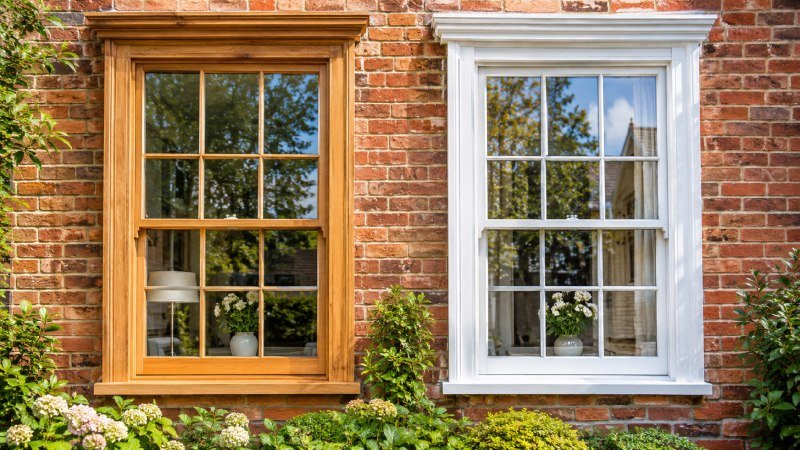
Choosing between timber and uPVC sash windows is one of the first big decisions you will face when planning new windows. It is also one of the most emotional. Some people cannot imagine anything but real wood on a period house. Others simply want windows that look tidy and never need painting.
Both camps have a point. The trouble is that price tags alone do not tell the whole story. A cheaper window at the start is not always cheaper over twenty years, and a pricier one is not automatically better value. Let’s break down the real cost differences so you can decide with a clear head, whether you are working from a quote or a sash window cost calculator.
The Upfront Cost
Let’s start with the figure most people look at first.
uPVC sash windows are generally cheaper to buy and install. The material is mass-produced, manufacturing is highly efficient and the frames do not need to be hand-finished in the same way as timber. If your main goal is to keep the initial outlay down, uPVC usually wins this round.
Timber sash windows typically cost more upfront. The materials are more expensive, the craftsmanship is more labour-intensive, and a properly made timber sash, especially a traditional box sash, takes skill to produce. The gap can be substantial, particularly if you opt for premium hardwood or a bespoke profile.
As a rough guide, many homeowners find that timber sits noticeably higher than uPVC when comparing like for like. Exact figures vary with size, specification and supplier, so treat any general comparison as a starting point and test your own numbers in a calculator.
The Ongoing Cost: Maintenance
Here is where the picture begins to shift.
uPVC maintenance
uPVC needs very little looking after. A wipe down with warm soapy water a few times a year is usually enough. There is no repainting and no sanding. Over time, though, the plastic can discolour, especially white frames in sunny aspects, and hinges, seals and sash mechanisms can eventually wear.
Timber maintenance
Timber asks for more attention. Painted frames typically need redecorating every several years, depending on quality of finish and exposure to weather. Staining or oiling is similar. Neglect can lead to rot, which is expensive to put right. On the other hand, well-maintained timber windows can last a very long time, and most problems can be repaired rather than requiring a full replacement.
When you work out the long-term budget, include the cost of paint, materials and either your own time or a decorator. It is a hidden cost that does not appear on the quote.
Lifespan and Replacement Cost
This is a part of the comparison that surprises many homeowners.
uPVC windows generally have a lifespan of a couple of decades or more, though the exact figure depends on quality, installation and exposure. When they reach the end of their life, they usually cannot be repaired in any meaningful way. The whole unit is replaced, and the old one often goes to recycling or landfill.
Timber windows, if cared for properly, can last far longer, and many Victorian sashes are still going strong after more than a century. Individual parts, such as a cracked sash, a worn cord or a rotten section of sill, can be repaired or replaced without scrapping the whole window.
So while timber costs more at the start, spreading that cost over a much longer lifespan can make it competitive, or even cheaper per year of use. It is worth thinking about how long you plan to stay in the property.
Energy Efficiency and Running Costs
Both materials can perform well when combined with good double glazing, so this is closer than people often assume.
uPVC frames are naturally good insulators and, with multi-chamber designs, can deliver excellent thermal performance. Timber is also a natural insulator, and well-fitted timber sashes with modern double glazing and draught-proofing can match uPVC for energy efficiency.
The bigger factor is usually the quality of the installation and the glazing specification rather than the frame material. A poorly fitted window in any material will leak heat, so do not skip this when comparing.
Appearance, Property Value and Planning Rules
Money is not only about what leaves your account. It is also about what your home is worth and what you are allowed to do.
Period and character homes. Timber sashes suit period properties and are often the preferred choice for estate agents and buyers. In many cases, they can protect or enhance the value of the home. uPVC sashes have come a long way, but the thicker frames and different profiles can look out of place on an older building.
Conservation areas and listed buildings. Restrictions here are common. Local authorities often require timber, and replacing it with uPVC without consent can cause real problems, including the cost of putting things right. If you live in one of these areas, check before pricing anything.
Modern homes. On a more recent property, uPVC is a perfectly sensible choice and may look more consistent with the architecture.
A Quick Cost Comparison
| Factor | Timber | uPVC |
| Upfront cost | Higher | Lower |
| Maintenance | Regular painting or staining | Minimal cleaning |
| Repairability | Excellent | Limited |
| Typical lifespan | Very long if maintained | Shorter, but low effort |
| Suits period homes | Yes | Sometimes |
| Planning-friendly | Usually | Not always |
Which Is Better Value?
The honest answer is that it depends on your situation.
Choose uPVC if:
- You want the lowest upfront cost.
- You would rather not spend weekends on a ladder with a paintbrush.
- Your property is modern or has no planning restrictions.
- You plan to move in the next several years.
Choose timber if:
- You live in a period, listed or conservation-area property.
- You care about authenticity and traditional detail.
- You are happy to maintain the frames.
- You plan to stay for the long term and value repairability.
How to Compare Prices Properly
To make a fair comparison, do these three things.
- Price both options with the same specification. Same size, same glazing, same style. Otherwise you are comparing apples with pears.
- Add up the maintenance. Estimate what you would spend on redecorating timber over the lifetime of the window, and include it in your calculation.
- Ask about guarantees. Both materials should come with a solid warranty, and the length and terms can tell you a lot about the manufacturer’s confidence.
Using a sash window cost calculator is a handy way to see the upfront gap between the two materials quickly. Just remember that the cheapest option on day one is not always the cheapest option on day ten thousand.
Final Thoughts
Timber and uPVC sash windows each have a place. uPVC offers a lower entry price and almost no upkeep, which suits many homes and budgets. Timber costs more at the start but rewards you with longevity, repairability and character, particularly on older properties.
Think beyond the quote. Consider how long you will stay, what your home needs and what you are prepared to maintain. Get those answers right, and the question of timber versus uPVC will usually answer itself.