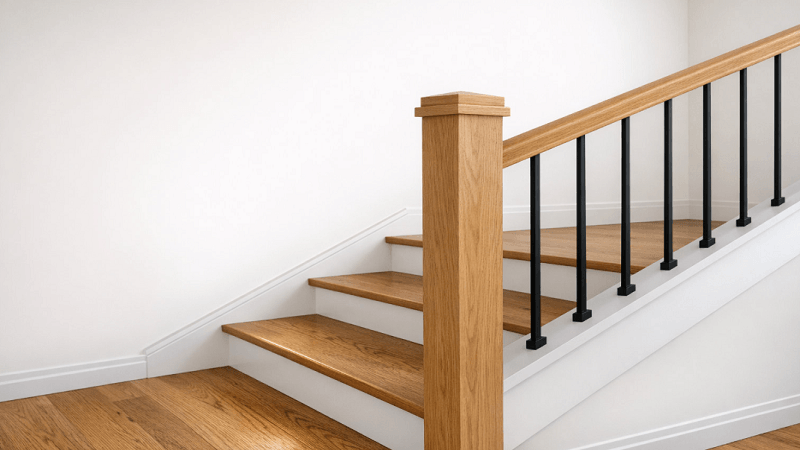
Understanding the components of your staircase helps maintain its safety and appearance. Knowing the function of each part enables you to notice wear and plan necessary updates. This guide covers the major structural, safety, and decorative elements commonly found in domestic staircases.
Whether you are assessing a worn set of steps or planning a home update, knowing the names and functions of staircase parts makes it easier to communicate with professionals and make informed decisions. Recognising the features of treads, risers, handrails, and landings often improves safety and gives you more control over your home’s appearance. By the end of this article, you will be able to identify key structural and visible elements found in most staircases. The term staircase parts can help you describe or research the right components when discussing repairs or design ideas.
The supporting structure under your feet explained
The main components that support a staircase are essential for both strength and comfort. Stringers are the inclined supports running along each side or beneath the treads, providing the primary structural backbone for the staircase. Treads are the horizontal boards you step on, while risers are the vertical pieces between each tread that set the step height. The dimensions and condition of these elements influence the feel and safety of your stairs, so regular checks for cracks, weakness, or looseness are advisable. Warped or creaking boards can suggest early signs of wear.
In open-plan homes, exposed stringers can add visual interest while still supporting the treads and risers from beneath or at the side. The shape and size of treads and risers also affect how easy it is to move up and down; steeper stairs may be more tiring or present more risk, especially for children or older people. Consistent tread depth and riser height are typically used as a basic benchmark for safety and accessibility. Replacing a cracked tread or loose riser promptly can help prevent further damage or accidents. The quality and installation of these support elements affect the stability and lifespan of your staircase.
The posts and rails provide structure and safety
At the base and turns of most staircases, newel posts anchor the handrails and often mark changes in direction or significant landings. These posts are thicker than the vertical spindles and serve as the main attachment points to ensure handrails are stable with daily use. Handrails are not just a design feature, they are shaped and positioned for secure grip and usually installed at a height suited to support safe use. The surface, shape, and installation of a handrail affect both comfort and reliability when moving up and down stairs.
Between the handrail and each tread, balusters or spindles are fitted at intervals to create a barrier against falls. In homes with children, their spacing is often determined to minimise risks. The material and finish of the balusters help shape the overall look of the staircase. If fittings become loose or spindles wobble, it indicates that maintenance may be needed for safety. These elements add to the look of the stairway while serving their practical purpose in staircase safety.
Transitions, finishes, and small details influencing use
Landings are flat sections breaking up a staircase, often where it changes direction or creates a resting point. A landing affects how a staircase feels, providing a pause and helping navigation for people with limited mobility or when carrying items. Caps, connectors, and fittings join sections at corners and turns, keeping handrails continuous and visually consistent. These components are chosen to cope with regular movement and to finish any sharp angles that might catch clothing or cause discomfort.
Along each tread, nosings or edges can improve grip and reduce the chance of slipping. Skirting or trim runs beside the stairs, bridging the join between steps and the wall for a neat appearance. Finishes such as staining, painting, or varnishing influence both maintenance and style. Painted staircases can show chips, while stained wood reveals the grain and can be easier to touch up. Attention to these details affects both the safety and how well your staircase works with the rest of your living space.
Describing and assessing your own staircase correctly
Identifying the style of your staircase helps in communicating effectively with professionals or seeking guidance. Common layouts include straight flights, quarter-turn, and half-turn staircases, each suitable for different spaces and affecting design choices. To describe your staircase, check whether it climbs directly, includes one or more 90-degree turns, or returns on itself. Many homes have one of these typical patterns, although older properties and custom designs may differ. Recognising the type clarifies which parts may need attention or custom solutions during repairs or upgrades.
It can be useful to keep a list of basic terms at hand for discussions and research. Essential staircase parts to note include stringer, tread, riser, newel post, handrail, baluster or spindle, landing, and nosing. Naming these features supports clearer communication when sourcing materials or seeking expert input. Observing the finish—painted, stained, or carpeted—also helps when matching for repairs. With this familiarity, these terms help reduce errors and make home improvement decisions easier.
Routine checks for stability and proper spacing should be part of home maintenance. Rails and posts should be firm with no movement, and nosings and edges should provide adequate grip. Uneven steps, protruding nail heads, or loose spindles are common trip hazards, particularly in busy or family homes. Safe spacing between balusters is crucial where young children are present, and damaged trim or skirting can expose gaps or sharp edges. By understanding and monitoring these details, you support both the safety and appearance of your home.