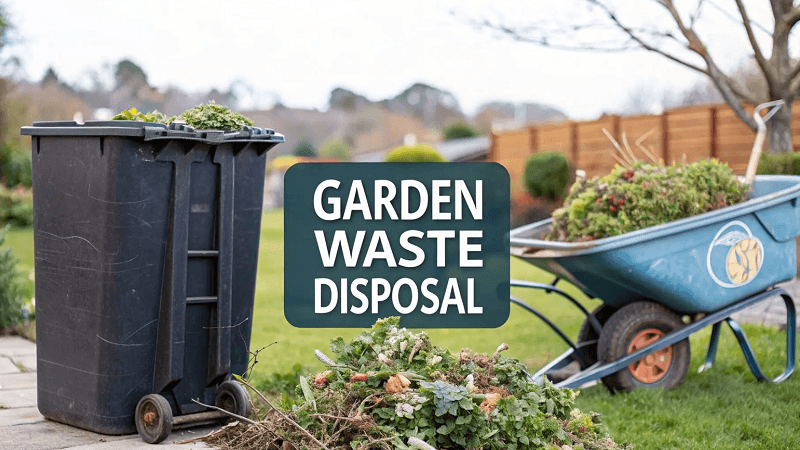
You’ve spent the weekend clearing the garden. There are bags of grass clippings, a pile of pruned branches, a heap of pulled weeds, and an old fence panel that finally gave way. You put it all out for the council and they take some of it. Or none of it. Or they tell you the brown bin service requires a subscription you didn’t know existed. Garden waste collection in London is one of those services that sounds simple until you actually try to use it. This guide explains exactly what councils will and won’t collect, and what your real options are for clearing the rest responsibly.
Why Is Garden Waste Disposal Such a Headache in London?
London’s 33 boroughs each run their own waste collection services and they don’t all work the same way. Some offer free garden waste collection as part of their standard service. Others charge an annual subscription for a brown bin. Some have scrapped garden waste collections altogether due to budget cuts, leaving residents to manage everything themselves.
The density of London also creates practical problems that don’t exist elsewhere. Small gardens generate surprisingly large volumes of waste when cleared properly. Properties without driveways, terrace houses with no side access, and flats with shared communal gardens all create logistical challenges that standard council collections aren’t set up to handle. The result: a lot of garden rubbish that has nowhere official to go.
The temptation to leave it bagged on the pavement, stuff it in general waste bins, or skip the problem entirely creates its own issues. Overloaded bins get rejected. Bagged waste left on pavements can attract fly tipping penalties. And just leaving the garden to pile up isn’t an option forever.
What Does the Council Actually Collect and What Are the Limits?
Where a London council does offer a garden waste collection service, there are almost always limits on what qualifies. Most borough brown bin or garden sack services will collect:
- Grass clippings and lawn trimmings
- Leaves and small twigs (bagged or loose in a bin)
- Weeds and plant trimmings (as long as they’re not in flower or seeding)
- Small prunings (usually up to a certain diameter typically 5–10cm)
- Soft garden debris generally bedding plants, dead flowers, vegetable tops
Collections are typically fortnightly or weekly during the growing season, and may be suspended entirely during winter. Volumes are usually limited to what fits in a designated bin extra bags left alongside are routinely left behind.
What Garden Waste Do London Councils Refuse to Take?
This is where many Londoners run into problems. Most councils will not collect the following through standard garden waste services, regardless of how neatly it’s presented:
Large branches, logs, and tree stumps. Anything above a few centimetres in diameter is typically rejected. Tree surgery waste even from a professionally hired contractor is rarely covered by residential collections.
Soil and turf. This is classified as inert waste, not green waste. It’s heavy, bulky, and requires separate disposal. Councils do not collect it through garden waste services and many HWRCs have limits on how much you can bring.
Rubble and hard landscaping waste. Old paving slabs, broken concrete, bricks, and gravel are construction waste not garden waste and will not be collected through any domestic garden scheme.
Treated or painted timber. Old fence panels, treated decking boards, and painted timber cannot go into green waste composting streams due to chemical contamination. They must be separately disposed of.
Invasive plant species. Japanese knotweed, giant hogweed, and other invasive species are controlled under the Wildlife and Countryside Act 1981. They cannot go in standard garden waste bins or be composted; they require specialist disposal through a licensed waste carrier.
Large volumes from clearance projects. Even if individual item types are accepted, a full garden clearance multiple loads of mixed waste after a renovation or years of neglect will always exceed what a bin collection can handle.
What Are Your Options for Getting Rid of Garden Waste the Council Won’t Take?
Once you’re outside standard council collection territory, you have a few practical routes:
Household Waste Recycling Centres (HWRCs). Every London borough has at least one HWRC where residents can drop off garden waste free of charge. This works well for occasional small loads but requires a vehicle, multiple trips for larger clearances, and some HWRCs now require advance booking. Soil, rubble, and invasive species are often subject to separate limits or charges even here.
Composting at home. For soft green waste like grass clippings and vegetable trimmings, a home compost bin is a zero-cost option. It doesn’t help with branches, soil, timber, or bulky waste but it reduces the volume of the most common items.
Skip hire. Skips can take mixed garden waste including soil, branches, and timber. You’ll need a skip permit from your council if placed on a public road and in London, narrow streets and permit lead times can make this less straightforward than it sounds. Skip hire London options are worth comparing for larger full-garden projects.
Professional garden waste clearance. A licensed waste carrier with a garden waste clearance service takes everything in a single visit: green waste, branches, soil, old timber, invasive species (with specialist handling), and hard landscaping waste. No permit required, no trips to the HWRC, no volume limits.
Why Do So Many Londoners Choose a Professional Garden Clearance Service?
The main reason is convenience but it’s not just about avoiding the effort. A professional garden waste clearance service resolves several problems at once that other options don’t:
- No vehicle required the team brings their own, meaning you don’t need a car or estate vehicle for heavy loads of soil and timber
- No permit to arrange unlike skip hire on a public road, a clearance service doesn’t require prior council permission
- No volume limit the team handles whatever is there, from a single overgrown corner to a complete garden overhaul
- Mixed waste handled in one visit green waste, inert waste, old timber, and hard landscaping cleared simultaneously
- Responsible disposal a licensed carrier provides a waste transfer note confirming compliant disposal; you’re protected under Duty of Care obligations
For landlords managing properties between tenancies, estate agents overseeing probate properties, and homeowners doing renovation work alongside a garden project, having everything cleared in a single visit by a single team is significantly more practical than coordinating multiple options.
What Happens to Garden Waste After It’s Collected?
A responsible garden rubbish removal service doesn’t simply send everything to landfill. The disposal route depends on the material type:
- Soft green waste (grass, leaves, plant trimmings) is sent to composting or anaerobic digestion facilities, where it’s converted into compost or biogas keeping it entirely out of landfill
- Wood and timber (non-treated) is chipped into biomass fuel or processed for wood recycling
- Inert waste soil, rubble, concrete goes to aggregate recycling plants where it’s crushed and reused in construction fill and road building
- Treated timber and contaminated materials that can’t enter composting or biomass streams are routed to Energy from Waste facilities as a last resort
Green waste recycling rates for professionally managed collections consistently outperform what happens when materials go via general waste bins which is why using a licensed service isn’t just legally cleaner, it’s also meaningfully better for the environment.
Ready to Clear the Garden? Here’s How to Get Started
We Clear Junk has been providing garden waste collection services across London since 2006. Our licensed team handles everything the council won’t do: branches, soil, old timber, fence panels, hard landscaping waste collected in a single visit and disposed of responsibly through licensed facilities.
Every collection comes with a waste transfer note as standard, and we work across all London boroughs with same-week availability. Whether you need a quick clear of a single overgrown corner or a full garden overhaul after years of neglect, get in touch for a fast, no-obligation quote.
FAQs
1. What garden waste will London councils not collect?
Most councils will not collect soil, turf, large branches, treated wood, or construction waste like rubble through standard garden waste services.
- Why is my garden waste not being collected?
Garden waste may be rejected if it exceeds bin limits, includes prohibited items, or if your borough requires a paid subscription service that is not active.
- Can I dispose of garden waste in my general bin?
No, placing garden waste in general bins can lead to collection refusal and may result in penalties if incorrect disposal is identified.
- What is the best way to get rid of large amounts of garden waste?
For larger projects, options include taking waste to a recycling centre, using skip hire, or booking a professional clearance service for faster and easier removal.
- Where can I arrange garden waste disposal in London?
You can book reliable and compliant garden waste disposal in London services to collect all types of garden waste in one visit.