
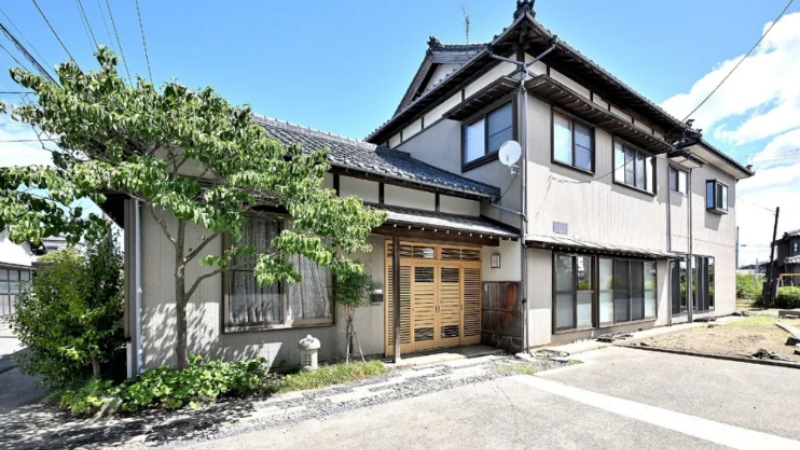
Japan has become an increasingly attractive destination for UK buyers looking to purchase property abroad. A combination of favourable exchange rates, a wide range of property types, and a legal framework that is fully open to foreign ownership has made the country far more accessible than many people realise. Whether the appeal is a city apartment in Tokyo, a traditional farmhouse in the Japanese countryside, or a ski chalet in Hokkaido, understanding how to buy a house in Japan is the essential first step. This guide walks through everything UK buyers need to know before getting started.
Foreign Nationals Can Buy Freely in Japan
One of the most important things to establish upfront is that Japan places no restrictions on foreign ownership of property. British nationals, and indeed buyers from any country, can purchase land and buildings in Japan on the same freehold terms as Japanese citizens. There is no requirement for residency, no need for a local co-purchaser, and no special visa linked to property ownership.
This legal clarity is one of Japan’s most significant advantages over other popular overseas property markets, many of which impose complex restrictions on how much foreigners can own and in what capacity. In Japan, the title is freehold, the property registry is transparent, and the legal protections are robust. What you purchase is clearly and fully yours.
What Kind of Properties Are Available?
Japan’s residential market covers a remarkably wide range of property types, which is part of what makes it interesting to such a broad range of buyers.
In the major cities — Tokyo, Osaka, Kyoto, Fukuoka — condominium apartments dominate the market (known as manshon) and compact detached houses (ikkodate). Urban properties tend to be well built, efficiently designed, and close to excellent transport links. Prices in premium central locations can be high, but there is a wide mid-range market in inner suburbs that offers genuine value by the standards of comparable cities like London or Sydney.
In the countryside, Japan offers something quite different: the kominka, a traditional Japanese farmhouse, often several centuries old, with heavy timber framing, generous room heights, and substantial land. Many of these properties have been left vacant as rural populations decline, and they can be purchased at strikingly low prices — sometimes well under £50,000 — though they typically require renovation work. For buyers with an interest in heritage property and a willingness to invest in restoration, they represent a genuinely rare opportunity.
Ski resort areas, particularly Niseko in Hokkaido, have developed a distinct international property market, with chalets and resort apartments popular among buyers seeking a combination of personal enjoyment and rental income potential during Japan’s celebrated powder snow season.
Understanding Property Prices
Japan’s property market is considerably more varied in price than its reputation suggests. While premium postcodes in central Tokyo command prices comparable to London, most of the country is far more affordable.
In regional cities such as Sendai, Kanazawa, or Hiroshima, detached family homes regularly sell for the equivalent of £100,000–£200,000. In rural areas, akiya — vacant properties left empty because of Japan’s demographic shift toward the cities — can be found at a fraction of those figures. Several local authorities have established akiya banks (public registries of available vacant properties) and offer grants or renovation subsidies to buyers willing to take on and inhabit these homes.
For UK buyers in particular, the weakness of the Japanese yen against sterling over recent years has significantly increased purchasing power, making this an unusually favourable moment to be entering the market. Even mid-range properties that would be unremarkable in price terms in Japan translate to very competitive figures when converted from yen to pounds.
The Step-by-Step Buying Process
The purchase process in Japan is well-structured and legally sound, but it is conducted almost entirely in Japanese and involves a fair amount of documentation. Most international buyers work with a bilingual estate agent or a specialist firm experienced in handling overseas clients, which makes the process considerably more straightforward.
The process typically runs as follows. First, the buyer identifies properties of interest, either through an agent or a specialist listings platform, and arranges viewings in person or by video call. Once a property is selected and an offer agreed, a formal purchase agreement (baibai keiyakusho) is signed in the presence of a licensed agent. A deposit is paid at this stage, typically around 10% of the purchase price. A judicial scrivener (shihō shoshi), a qualified legal professional who manages the official transfer and registration of title, then handled completion.
The full process from accepted offer to completion takes between four and eight weeks. One important consideration for UK buyers is that Japanese mortgage lending to non-resident foreign nationals is limited, with most domestic lenders requiring residency. The majority of international buyers, therefore, purchase in cash or arrange financing through a lender in their home country.
Additional purchase costs — including agent fees (typically 3% of the purchase price plus ¥60,000 and consumption tax), registration taxes, and judicial scrivener fees — can add 6%–8% to the headline purchase price, so buyers should factor these costs into their overall budget from the outset.
Older Buildings and Earthquake Safety
Japan updated its Building Standards Law significantly in 1981, introducing far more stringent seismic resistance requirements. Properties built before that date may not comply with current earthquake safety standards without structural retrofitting. This applies particularly to older kominka and pre-1981 urban houses.
This does not necessarily mean that buyers should avoid older properties, as many owners have already retrofitted them or built them in lower-risk areas. However, buyers should commission a professional structural survey before proceeding with any pre-1981 purchase and include potential remediation costs in their budget. A reputable agent will clearly flag this issue and help buyers identify properties that already meet modern standards.
Ongoing Costs to Budget For
Annual property taxes in Japan are calculated at approximately 1.4% of the government’s assessed value of the property, which is typically well below the market price. This means tax bills are modest — often ¥100,000–¥200,000 per year for a mid-range urban property, and lower still for rural homes with low assessed land values.
For condominium purchases, monthly management and maintenance fees cover communal areas and building upkeep and need to be factored into ongoing costs. For standalone houses, owners bear full maintenance responsibility, and Japan’s climate — particularly the humidity of summer and the heavy snowfall in northern regions — means that regular upkeep of wooden structures is important.
Starting Your Property Search
The best starting point for any serious buyer is to browse available listings through a specialist platform that understands the needs of international clients. This allows for a realistic picture of what is available across different regions and price points before committing to any agent relationship or viewing trip. Browsing current houses for sale in Japan gives a clear sense of the range on offer — from urban apartments and city-fringe family homes through to rural kominka and resort properties — and is a useful foundation for any conversations with agents or advisers that follow.
Japan’s property market rewards buyers who take the time to understand it. The legal framework is sound, the process is manageable with the right support, and the range of properties available to international buyers is genuinely exceptional. For UK buyers willing to look beyond the familiar markets of Southern Europe, it represents one of the most interesting overseas property opportunities available today.