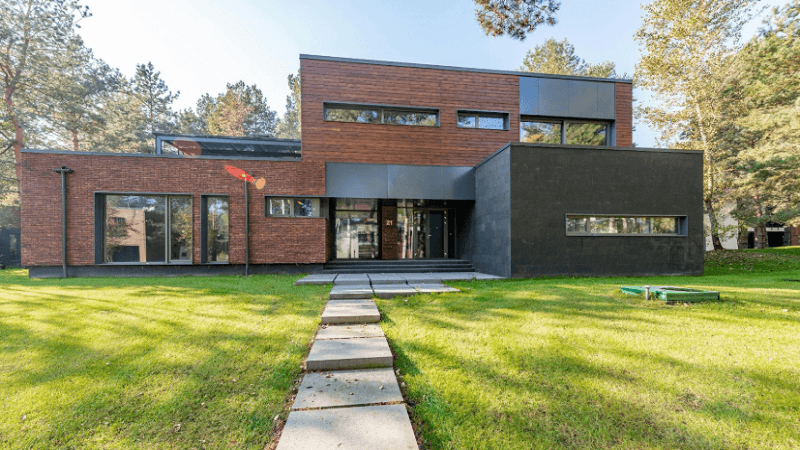
The friction between an architect’s vision and a client’s reality often peaks during the finishing phase. It is a stressful time for everyone involved. Most clients struggle to look at a small, two-inch physical sample of stone or wood and imagine it covering a two-story facade. This is a significant cognitive challenge. When people cannot visualize the end result, they feel anxious. This anxiety leads to hesitation or, worse, poorly informed decisions. Professional architecture renderings serve as a bridge over this gap. Without them, you are essentially asking a client to gamble on a high-cost outcome based on a tiny fragment of material.
The financial risks of this ambiguity are massive. Change orders are the enemy of any smooth construction project. When a client sees a material installed on-site and realizes it does not match what they had in their head, the project grinds to a halt. Statistics show that aesthetic-related change orders can increase a project’s total cost by 10% to 15%. This creates immediate tension. It strains the relationship between the architect, the client, and the contractor. Utilizing 3d rendering for architects at the right stage prevents these disputes before they even start. By providing a clear, realistic picture, you align everyone’s expectations and keep the project moving forward without the fear of expensive mistakes.
Transitioning From Physical Samples To High-Fidelity 3D Visuals
In the past, mood boards with physical scraps were the gold standard. They are still useful for tactile feedback, but they fail to show how materials occupy space. In 2026, architectural standards have moved beyond these static boards. Physical samples cannot account for environmental factors. A piece of gray slate looks completely different in a dark showroom than it does under the midday sun on a south-facing wall. This is where a modern rendering service adds immense value. It places the materials in a simulated, real-world environment.
Modern software handles lighting and shadows with incredible accuracy. It accounts for a phenomenon called metamerism, where colors appear to change under different light sources. By using 3d rendering for architects, you can show a client exactly how their kitchen marble will look at 8:00 AM versus 6:00 PM under LED lighting. This level of truthfulness is impossible to achieve with just a physical sample and a flashlight. It moves the conversation from “I think I like this” to “I know this works.” This evolution in the selection process ensures that the palette is finalized based on reality, not a guess made in a design studio.
The Role Of Photorealistic Textures In Finalizing Palettes
The technical side of rendering has seen a massive leap forward. We now use Physically Based Rendering, or PBR, which uses mathematical models to simulate how light bounces off different surfaces. This means a 3d architecture render can accurately show the reflectivity of high-gloss glass versus the soft matte finish of brushed aluminum. It captures the subtle porosity of concrete and the intricate grain of natural timber. For a client, seeing these textures in high resolution is a game-changer. It allows them to virtually “feel” the space before placing a single order.
Once finalized, these renders serve as a digital contract. There is no longer any room for “I thought the wood would be darker” or “I didn’t realize the stone was that textured.” Both the architect and the client have seen the exact same outcome in a high-fidelity image. This visual agreement is the most effective way to ensure aesthetic satisfaction. Using rendering services to create these detailed textures provides the architect with a layer of protection. It demonstrates that the design intent was clearly communicated and accepted by the client, making the transition from the digital model to physical construction much safer.
Preventing On-Site Disputes And Costly Rework
The logistics of a construction site are complex. Hundreds of decisions are made every week. Having a finalized, high-quality architectural render serves as a vital reference point for the entire team. It isn’t just for the client; it is for the contractors and subcontractors too. When a tile setter knows exactly what the finished bathroom should look like, they are less likely to make a layout error. If a client questions a choice during the build, the architect has a powerful tool to resolve the issue quickly. They can point to the approved visual and confirm that the installation matches the agreed-upon plan.
This proactive approach effectively kills the “I thought it would look different” excuse. This is a common phrase that leads to expensive tear-outs and re-installations. Industry data from 2026 suggests that projects incorporating 3D material finalization see a 25% reduction in these types of change orders. This saves the client money and protects the architect’s time. A rendering service might seem like an upfront cost, but compared to the price of replacing a poorly chosen facade or a kitchen island’s worth of granite, it is an incredibly cheap insurance policy. It turns a potential conflict into a simple verification process.
Strategic Integration Of Rendering In The Design Workflow
To get the most out of these visuals, use them at specific milestones. You don’t need a photorealistic image on day one. Instead, follow a logical progression to guide the client through the decision-making process. This prevents the client from feeling overwhelmed by too many choices at once.
- Initial Concept Renders: Start with basic shapes and light to agree on the overall feel before worrying about specific wood grains or stone types.
- Material Iteration Phase: Present a few distinct options, like a “warm minimalist” look versus a “cool industrial” one, to see what resonates with the client.
- The Final Freeze: Once a palette is chosen, produce one high-fidelity 3D architectural render for formal sign-off before any materials are purchased.
- Lighting Simulation: Use the software to show how the materials look at different times of day to ensure the client is happy with the look under all conditions.
- Contractor Briefing: Provide the final renders to the site foreman so the construction team understands the visual goal they are working toward.
Enhancing Client Confidence And Project Momentum
Building or renovating a property is a massive emotional and financial investment. It is natural for clients to feel “buyer’s remorse” or a spike in anxiety during the long months of construction. When the walls are just studs, and the floor is bare concrete, it is hard for them to stay excited. This is another area where 3d rendering for architects proves its worth. A photorealistic image gives the client something to hold onto. It provides a sense of security and excitement that their money is being spent on something beautiful.
This boost in confidence directly impacts the project’s speed. A confident client is a fast decision-maker. They are much less likely to second-guess their choices or ask for midstream changes that throw the schedule off track. When they can see the finished room in a 3d architecture render, they feel a sense of ownership early on. This momentum is contagious. It keeps the design team and the client moving in the same direction with a shared sense of excitement rather than dread about the unknown.
Conclusion
High-end visualization has become a cornerstone of modern risk management. It is no longer just about making a pretty picture for a presentation. It is about precision, communication, and financial safety. The cost of a professional rendering service is a tiny fraction of what it costs to fix a mistake on a construction site. Replacing a misplaced marble slab or repainting a whole house because the color “looked different on the chip” is a waste of resources that can be easily avoided.
As we move through 2026, the technology behind 3d rendering for architects will only get better. It has become a fundamental necessity for any serious practice. It ensures that client expectations are managed with honesty and clarity. The most successful projects are not just the ones that look good at the end, but the ones that were built with a clear, shared vision from the start. By closing the gap between the digital plan and the physical reality, architects can deliver a better experience and a better building.