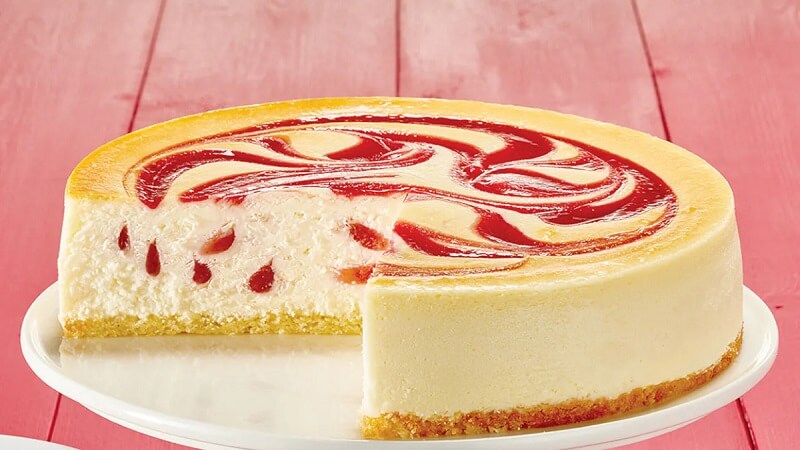
You will often spot cheesecake and traditional cakes in dessert displays. But the two are completely different in:
- Texture
- Ingredients
- Preparation
- Baking method.
Both are dessert tarts. But cheesecake is much richer. It cannot compare to traditional sponge or layered cakes.
Many people assume that it is just another cake. Only with cream cheese thrown on top. But that’s not the case. It is more like a custard. It differs in every way, from filling to baking.
The key distinction lies in the base ingredient
Regular cakes rely heavily on flour. It is the structural foundation. Other ingredients are:
- Eggs
- Sugar
- Leavening agents.
They result in the soft, airy texture of regular cakes. This includes:
- Sponge cakes
- Butter cakes
- Layered celebration cakes.
Cheesecake works differently. It contains more soft cheese. Typically:
- Cream cheese
- Ricotta
- Mascarpone
- Any mild cheese type.
Flour is a minor ingredient. But it may not even be present. This makes for a creamier dessert. As opposed to a fluffy crumb.
That difference in texture is apparent from the first bite. Regular cake is light and airy. Cheesecake from a fresh bakery is smooth, rich, and compact.
It uses a completely different baking method
Another distinguishing quality is how it is baked.
Traditional cakes use specific ingredients to facilitate rapid rise. This could be:
- Baking powder
- Baking soda
- Whipped eggs.
But cheesecake typically bakes at a low temperature. And for a long time. This prevents cracking and overbaking.
Many bakers also use water baths when preparing it. This approach helps to distribute warm, even heat around the dessert. Hence, it retains the creamy consistency it is known for.
A baker must keep an eye on cheesecakes more closely than other cakes. Any temperature error may impact the end product in terms of:
- Texture
- Moisture
- Surface appearance.
Overbaking can quickly make the cake grainy or dry.
The texture is closer to custard
Now, the texture! Traditional cakes are:
- Soft
- Springy
- Easy to cut across into thin layers.
Cheesecake is purposely thicker and smoother. This is due to the high fat content of cream cheese and eggs.
Sponge cake batter traps air for lift. But cheesecake filling makes a creamy texture. It stiffens during baking. Then, it hardens even more in the cooler.
That is why you have to refrigerate it before serving. This helps to:
- Stabilize the filling.
- Improve its
It has an older history
Cheesecake is actually older than many modern-day cake varieties. It dates back to ancient Greece. Cheese dessert toppings were already being made centuries before layered cheesecakes became widely popular.
As time went on, regional variations emerged. For example:
- Cheesecakes from New York have a thick cream cheese filling.
- Those made in Italy frequently use ricotta for the lighter version.
- Japanese has a softer and more airy style.
The flavor balance differs
Typical cakes tend to be very sweet. They contain a lot of:
- Frosting
- Fillings
- Sugar-rich
Cheesecake is sweet and tangy. This little bit of acidity is important. It ensures that the cake is not too heavy.
Bakers also use some ingredients to accentuate the flavour and texture. For example:
- Sour cream
- Lemon juice
- Y
The result is a dessert that is richer than traditional cake. But not necessarily sweeter.