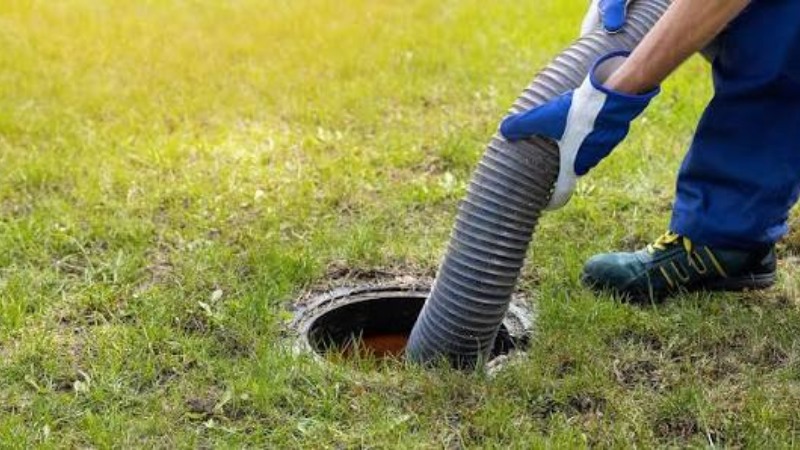
Two hundred seats, three restrooms, one fellowship-hall kitchen, and about three hours for all of it to happen at once. That is the load a mid-size church puts on its septic system every Sunday, and it is why the volunteer who keeps the building running eventually starts pricing commercial septic services west palm beach fl instead of calling whoever pumped the tank last time. The system is rarely failing because it is old. It is failing because six quiet days hide one very loud morning. A building like that should be serviced the way a restaurant is serviced, on a cadence sized to its busiest three hours rather than its weekly average.
Peak Load Breaks Systems Long Before Total Volume
A septic tank does its work by giving solids time to settle and grease time to float. Feed it a slow trickle across a whole day and it handles that beautifully. Feed it two hundred people inside a hundred and eighty minutes and the water rushing through carries solids out toward the drain field before anything has had a chance to separate, which is the failure that costs real money later. Guidance from the US EPA, still current in August 2026, sizes a wastewater system around daily flow calculated from occupancy and site soil rather than around a building’s floor plan. Occupancy. Not square footage, and not the number of fixtures somebody drew on a permit set in 1994.
So the weekly total can look modest while the peak is brutal. A church that uses less water in seven days than a four-person house does can still punish its drain field harder, because the drain field does not care that the building sat empty from Monday to Saturday. What it responds to is how fast it was asked to accept water on the one morning that mattered. Total gallons is the number people quote. Gallons per hour is the number that decides how long the field lasts.
Three Hours A Week Behaves Like A Restaurant
Do the rough arithmetic for a two hundred seat congregation and it gets uncomfortable fast. Say each person uses three gallons across the morning between restrooms and the coffee station, so call it six hundred gallons in that window. Honestly, closer to nine hundred once the fellowship-hall kitchen runs the dishwasher twice and someone fills a mop sink after the potluck. Add grease from a hundred plates of fried chicken and the tank is being asked to do restaurant work on residential hardware.
A facilities volunteer at a church about that size kept a note on his phone every time a drain ran slow. Eleven entries by spring, and every single one of them was a Sunday. Nobody had noticed the pattern before, because the plumber who came out on a Tuesday always found the system behaving perfectly.
Job after job, what turns up on a spike-load building is a tank that is technically the correct size sitting in front of a drain field that has been hit like a restaurant’s for a decade. The kitchen is usually the part nobody has on any schedule at all. Grease from a church kitchen is the same grease a diner produces, just delivered in one shift a week instead of spread across seven, and a grease interceptor that is never serviced sends the difference straight downstream. That is the whole diagnosis on most of these buildings.
What The First Ninety Days Of Service Look Like
Bringing a church building onto a commercial cadence is not dramatic. In the first week, a contractor worth hiring opens the tank, measures the sludge and scum layers, and walks the drain field looking for soft ground or standing water after a dry stretch. They should also ask what time services start and end, which sounds like small talk and is actually the sizing question. Expect a pumping and a grease interceptor cleaning in that first visit if the building has never been on a plan.
By the second month, you have a baseline. After a few normal Sundays, schedule another tank inspection, and use the layer measurements to determine whether the interval should be six months, nine months, or something tighter around holidays. Within 90 days, document the entire plan as a dated schedule, including the two weeks each year that put the greatest stress on the system—at most churches, Easter and whatever the December calendar brings. After that, you manage routine maintenance instead of fighting fires.
Questions Worth Asking A Commercial Septic Contractor
Most bids for this work look identical on paper. The difference shows up in whether the contractor asks about people or about gallons, and you can surface that in one phone call. Ask these before anyone quotes a number.
- How many people use this building at its busiest, and how long does that last? A good answer treats your answer as the sizing input, not as background.
- Will the kitchen grease interceptor be on the same maintenance plan as the tank? A good answer gives both a stated interval, not just the tank.
- What did you measure in the tank, and what were the numbers? A good answer names sludge and scum depths in inches instead of saying it looked fine.
- What does an emergency call on a Sunday morning cost, and how fast can you be here? A good answer gives a response window and a rate, in writing.
- Are you licensed for commercial work in this county, and can you handle permits if the field needs replacing? A good answer is short and specific.
The kitchen question is the one that separates contractors quickest. Plenty of outfits will happily pump a tank and never once look at the interceptor twenty feet away, then act surprised when the field goes soft two years later. If a bidder cannot tell you what the grease plan is, the bid is incomplete regardless of the price on it.
Size The Schedule To The Busiest Hour
A church septic system almost never fails on a random weekday. It fails during the second service, or twenty minutes into a fellowship dinner, in front of everyone, on the day the building is most visible to the community it serves. Getting ahead of that is mostly a scheduling decision rather than an equipment decision, and it starts by describing the building honestly to whoever is bidding: not a small property with light use, but a facility that absorbs a week of load in three hours. That framing is the real difference between a residential pumping call and the commercial septic services west palm beach fl church buildings actually need. Write the interval down, put the kitchen on the same page as the restrooms, and the Sunday rush stops being the thing that breaks the place.