
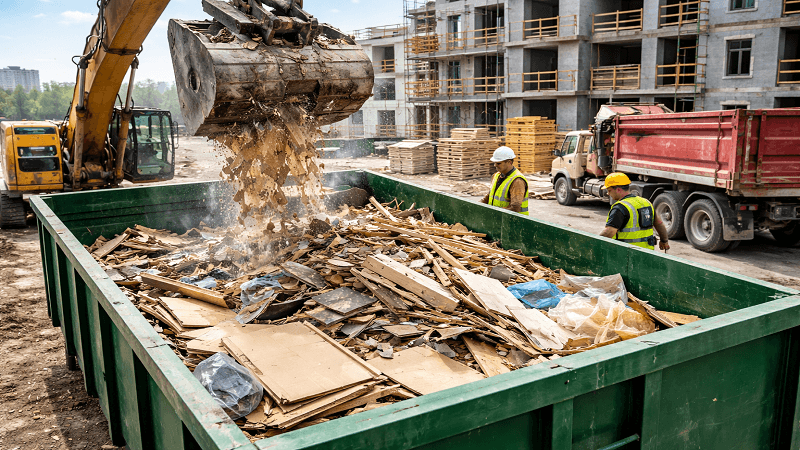
Construction schedules are built around coordination. Materials must arrive on time, trades must work in sequence, and each phase must be completed before the next begins. In this tightly managed environment, waste removal plays a more important role than it may initially appear. When debris is not handled efficiently, it can disrupt workflows, slow crews, and create delays that affect the entire project timeline.
For contractors, integrating waste removal into project planning helps keep work moving steadily from start to finish.
Debris Can Quickly Disrupt Workflow
Construction work generates a continuous stream of waste. Demolition produces heavy materials, framing creates wood offcuts, and finishing stages introduce packaging and trim scraps. If this debris is not removed consistently, it can spread into walkways and work areas.
Cluttered sites force crews to spend time navigating obstacles or relocating materials before continuing their tasks. Even small interruptions can compound over time, especially on projects with overlapping trades.
Maintaining a clear plan for debris removal helps prevent these disruptions from affecting productivity.
Keeping Work Areas Accessible for Crews
Access is essential on active job sites. Workers need clear pathways to move tools, materials, and equipment efficiently. When debris accumulates, these pathways can become blocked or restricted, slowing progress across multiple teams.
Consistent waste removal keeps work areas open and allows trades to transition between tasks without unnecessary delays. This is particularly important on projects where multiple crews operate in the same space throughout the day.
Clear access also supports smoother material deliveries, which are often scheduled around specific project milestones.
Supporting Phase Transitions
Construction projects move through defined phases, and each transition depends on the completion of the previous stage. Before framing begins, demolition debris must be cleared. Before finishing work starts, structural and installation waste must be removed.
If debris remains in place, it can delay inspections or prevent the next phase from starting on time. Coordinating waste removal with these transitions ensures that each stage begins with a clean and organized work environment.
Planning removal around peak debris periods helps maintain momentum between phases.
Reducing the Need for Rework and Delays
Unmanaged debris can lead to avoidable complications. Materials left in place may be damaged, misplaced, or interfere with installation work. Crews may need to pause and reorganize the site before continuing, which adds unplanned time to the schedule.
By removing waste consistently, contractors reduce the likelihood of these disruptions. Clean sites make it easier to track materials, complete tasks accurately, and avoid unnecessary rework.
This level of organization supports more predictable project timelines.
Coordinating with Waste Service Providers
Reliable waste removal depends on coordination with service providers. Contractors often schedule container delivery, pickup, and potential swaps based on project timelines and debris volume.
In practice, teams may work with providers such as Waste Removal USA alongside local haulers to align disposal logistics with construction schedules. Timely pickups and responsive service help prevent overflow and ensure disposal capacity matches the pace of work.
Effective communication between job site teams and service providers supports smoother scheduling overall.
Improving Safety and Efficiency Together
Safety and scheduling are closely connected. Debris creates hazards that can slow movement or lead to accidents, both of which can impact project timelines. Maintaining a clean site reduces these risks and allows crews to work more confidently and efficiently.
When waste removal is part of daily operations, cleanup becomes a continuous process rather than a disruptive task that must be addressed later.
Maintaining Professional Site Conditions
Well-managed construction sites reflect strong organization and planning. Clean work areas make it easier for supervisors to monitor progress, for inspectors to conduct evaluations, and for clients to review the project.
Professional site conditions also help maintain focus among crews, reducing distractions caused by clutter or disorganization.
These factors contribute to smoother project execution from beginning to end.
Waste removal is an essential component of keeping construction projects on schedule. By preventing debris from interfering with workflows, supporting phase transitions, and maintaining clear access across the site, contractors can reduce delays and improve overall efficiency.
When waste management is integrated into project planning rather than treated as an afterthought, it becomes a practical tool for maintaining steady progress and delivering projects on time.