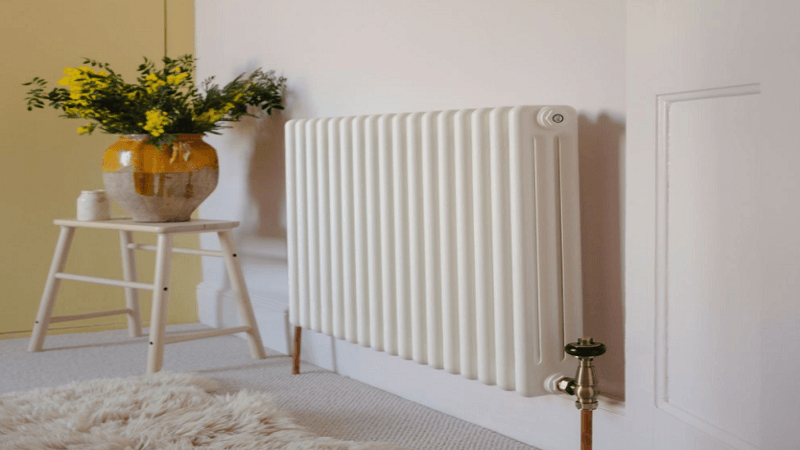
You’re sitting quietly in your living room and then hear a weird clanking, hissing or gurgling coming from the radiator. That can be alarming, especially on a cold winter night when you hope your heating is working at its best. Regardless of whether to choose a designer radiator or a more standard electric radiator, the good news is that a noisy radiator is a problem that is normally no more than a minor annoyance that can be easily cured by yourself and certainly without the help of a heating engineer.
Before you start to freak out, there is this: your radiator is basically a messenger. When it starts to make weird noises, it has a message for you: There’s something wrong inside the system. The key is interpreting what each sound means and how to react.
Why Radiators Make Noise in the First Place
How do air and sludge affect the sounds that I hear from my central heating? This short guide explains how air and sludge can cause changes in the sounds that are normally heard from a central heating system that are indicative of a fault. The normal operation of central heating is achieved by hot water being pumped from the boiler through a series of pipes (radiator pipes) to the individual radiators.
These form a closed-loop circuit, which is dependent on the correct pressure and free flow. Each component of the central heating system operates together to provide smooth and reliable running until a fault develops, and it is the changes in the sounds that are normally heard that give the first indication that something is wrong.
If you’re going to fix a radiator problem, you first need to work out what kind of problem it is, and that typically starts with identifying the noise. This guide runs through the common noises your radiator might be making, what they are, and what they mean for you.
Gurgling or Bubbling Sounds
Noisy radiators are a problem that occurs for several reasons, most commonly because there is air locked within the system. The air prevents the hot water from circulating properly, and as the water attempts to dislodge the air bubbles, it creates the bubbling noise.
However, the easiest way to solve this problem is to bleed the radiator. You will need a radiator key or a flathead screwdriver, a cloth to catch any drips, and a small jug to pour the water into. Turn off the heating, allow the radiator to cool down a bit and then slowly turn the bleed valve at the top corner of the radiator. You will hear a hiss or a hissing sound when the air is released. followed by a steady trickle of water. Once the flow of water has stopped, turn the valve back the other way to lock it in place.
After bleeding radiators, always check the boiler pressure. If it is below 1.0 bar, the boiler will need to be repressurised using the filling loop.
Banging or Knocking Noises
Quite a few of our customers have radiators with a loud banging or knocking noise. This is quite a serious problem, which we refer to in the trade as ‘kettling’. This occurs when the heating water boils, but not in a continuous fashion. It boils in a strange, uneven fashion and creates a knocking or banging noise. This noise is similar to that you would expect to hear from a kettle that is suffering from a buildup of limescale. The same is happening inside the radiator or even inside the boiler pipes. As the years pass, the buildup of scale and sludge can create this problem.
This type of problem is far more common in domestic properties supplied with hard water, particularly in the English West Country and parts of Wales.
How to fix it:
For most radiators, a full system power flush is the best option, as this will remove all the sludge and scale that has built up over the years. This is a job for a qualified heating engineer, as it requires a range of specialist equipment and chemicals. However, it’s a job well worth doing as it will improve the efficiency of your heating system, take the pressure off your boiler and save you money on your fuel bills in the long run.
We can also suggest fitting a magnetic filter or additives to your hot water system to prevent future “kettling” problems in your home.
Hissing Sounds
Yes, that hiss is quite typical for a radiator making those noises. The hiss is likely due to air leaking from a place it shouldn’t. This could be from the bleed valve being slightly loose or even a very small leak from a joint. Alternatively, the pressure in the system may be slightly high.
Is the hissing sound coming from the actual bleed valve or elsewhere? You may be able to stop the hissing by tightening the nut on the bleed valve with a radiator key. Only tighten firmly if necessary, as over-tightening can damage the item. Check if the hissing sound is coming from elsewhere along the radiator, from its pipes or even from nearby objects. Even a slow leak will, over time, allow air to enter the system, creating these unwanted noises.
Ticking or Clicking Noises
‘Normally’ is a word best not to use, but in this case it will do. The usual click/tick-tock sound whilst warming up or when switching from heating to hot air is nothing to worry unduly about. The cause of the sound is the normal thermal expansion of the various metal parts within the pipes and the rad itself, and how they expand as they warm up and then contract as the system drops in temperature.
At first, it will drive you mad, but you will soon realise that it is not the new boiler ticking; it is the other pipes in the loft or under the floor ticking with it. If the ticking is very loud or persistent, then it is probably due to pipes knocking against pipe clips, floorboards or joists as the pipes expand. Look for any pipes that are tightly fixed in clips under the floor or along the skirting board, and try to slightly loosen the clips. If this is not possible, you can pad out with foam insulation tape.
Whistling Noises
Water flowing too quickly through a valve that is partially closed or obstructed often causes a whistling radiator. Check the thermostatic radiator valve (TRV) on the side of the radiator. If it has been turned down very low, the restricted opening can cause the water to whistle as it passes through.
Try opening the valve a little more and see if the noise stops. If the whistling continues, the valve itself may be worn or faulty and could need replacing.
When to Call a Professional
Most radiator noises have a simple fix that you can manage yourself. However, there are times when it is wise to call in a qualified heating engineer:
- The banging or knocking is severe and persistent, even after bleeding.
- You notice visible leaks around valves, joints, or the radiator body.
- The boiler pressure keeps dropping despite no visible cause.
- Multiple radiators across the house are making noise at the same time.
These situations could point to a deeper issue with the system that requires professional diagnosis.
Keep Your Radiators Running Quietly
Unlike some other repairs that a noisy radiator may require, many simple solutions can be carried out by the homeowner. By bleeding radiators, checking and re-pressurising your boiler and simply knowing what sounds your radiator should make, you can ensure your heating system is running at peak performance all year round. Not only will these simple measures cost very little to undertake, but they will also save you money by increasing efficiency, and decrease the cost of running the system whilst at the same time giving you a system that you can rely on.
These common noises can help identify the cause if familiar sounds are heard, but if in doubt or the noises persist after investigating the cause, advise a professional heating engineer to check for any more serious issues.